Threaded Chaos Blog Hop with Aurifil
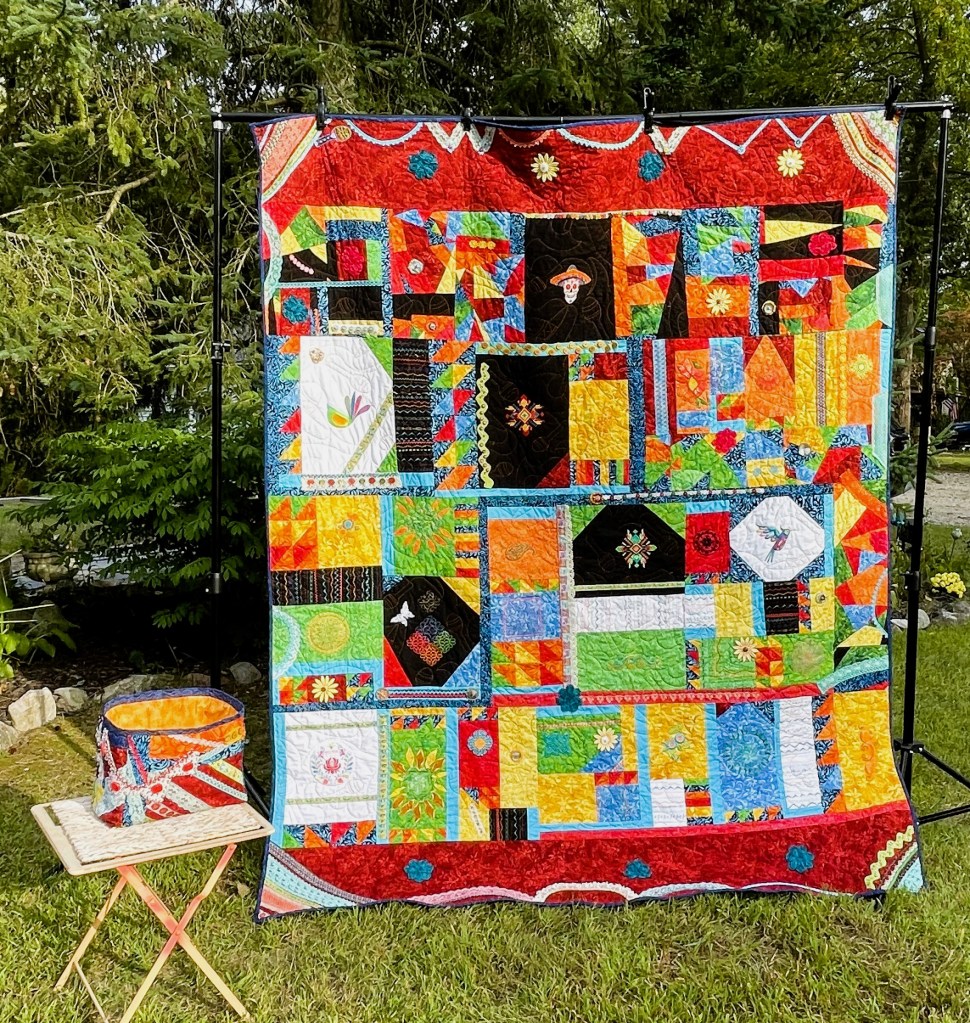
This September 2025 Island Batik Ambassador challenge was all about crazy quilts. Crazy quilts are known for their rich, decorative stitching. A crazy quilt is a truly artistic creation by the use of decorative embroidery stitches and intricate embellishments. Beyond stitching, crazy quilts can be adorned with appliqué, buttons, lace, ribbons, beads, with no strict patterns or rules. This blog was created using some products sent to me as an Island Batik Ambassador. There is an Island Batik giveaway associated with this September 2025 Blog Hop and Pink Tulip Quilting will do a giveaway starting September 12 through September 15, 2025 with rules announced on PTQ’s IG.
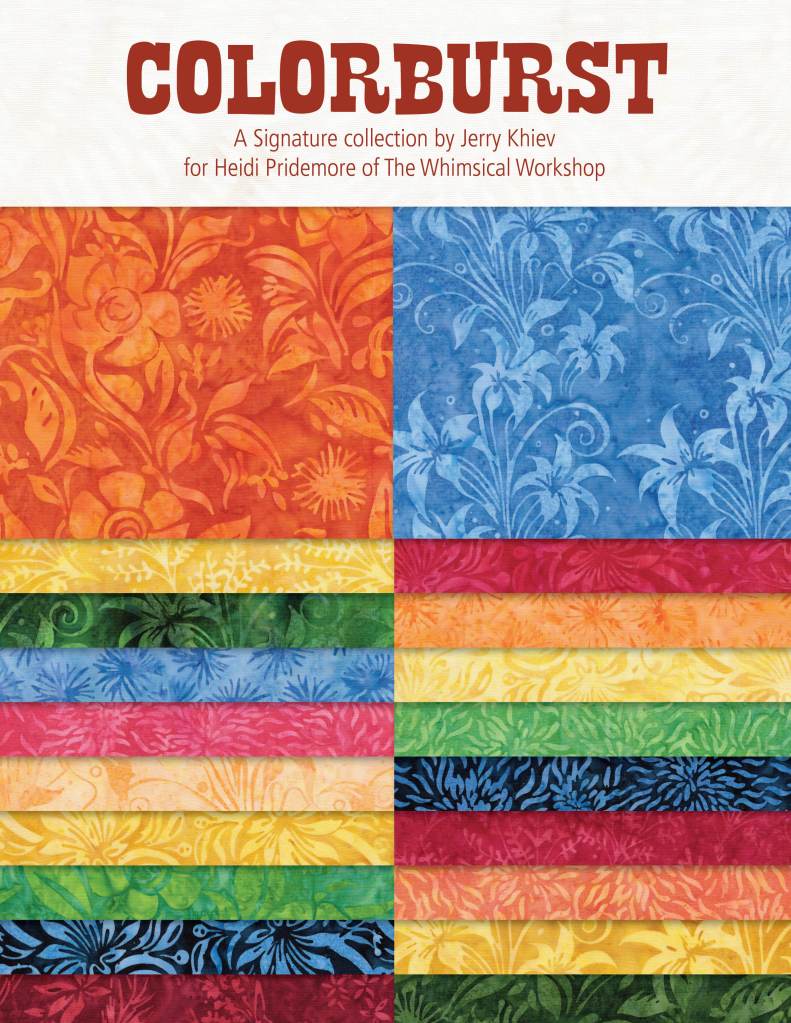
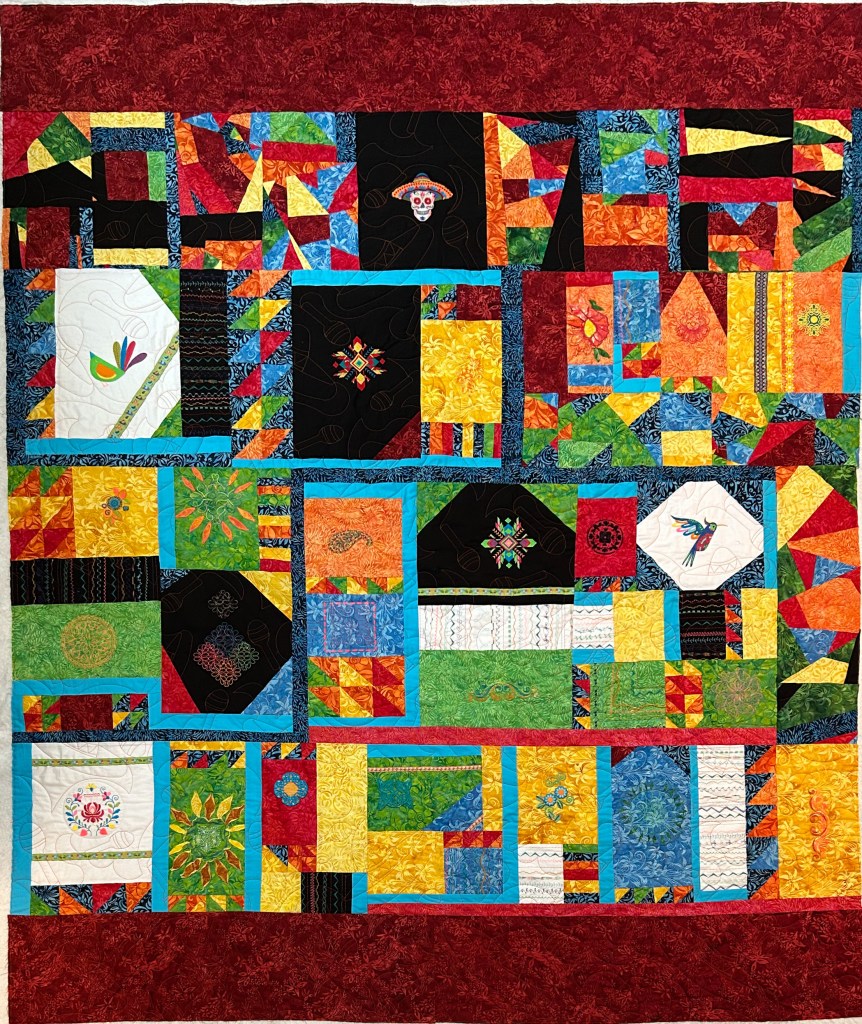
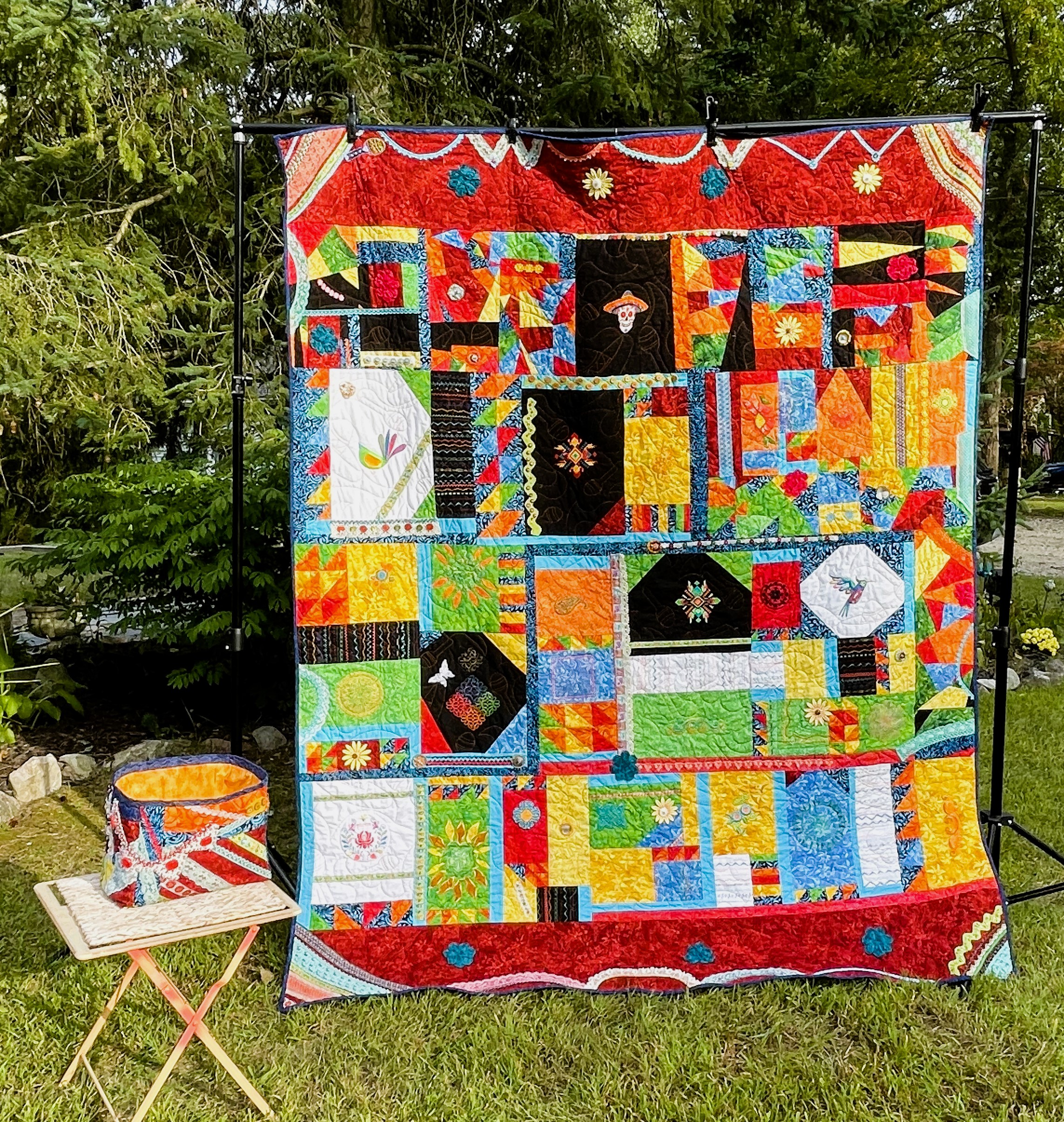
My assigned collection for this challenge was Colorburst by Jerry Khiev for Heidi Pridemore of the Whimsical Workshop. This bright collection was my inspiration to do a Colcha Loca or Hispanic Crazy Quilt.
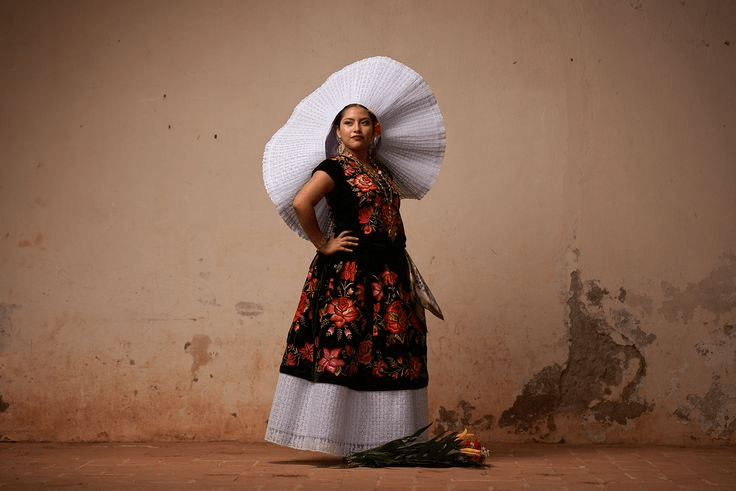
The research for this project included investigating Mexican embroidery from the indigenous cultures of the Otomi (Nuhu), Mayan, Huastec, and Oaxaca. As with most cultures, the embroidery motifs and colorways are seen in their traditional clothing.
Otomi textiles, tenangos, take weeks or even years to embroider and are based on ancient cave paintings depicting birds and flowers. Symbols also include animals, abstract designs, people, and mythological creatures. Here is an embroidery tutorial for Otomi herringbone stitch.
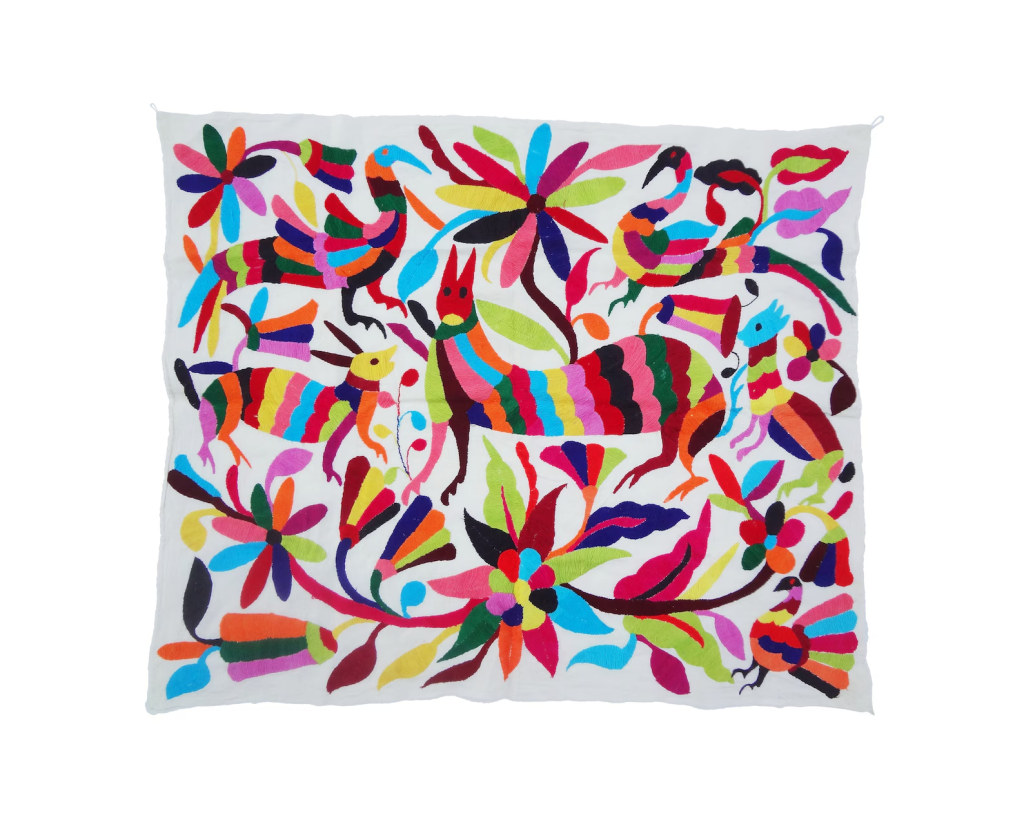
Mayan or Yucatecan embroidery is more intricate with artisans mastering at least 30 of 40 embroidery stitches. Embroidered clothing is worn from birth throughout life and is especially used in ceremonial garb. Tribal differences are identified by the embroidery motifs used. The Xmanikté or “everlasting flower” is a serpentine stitch that represents the diamonds on the skin of the rattlesnake.
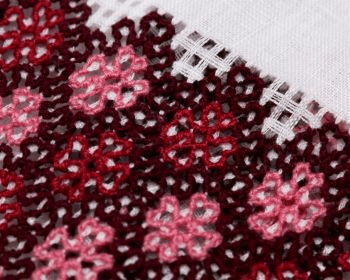
Through embroidery, the indigenous community of Huasteca express the oral mythology that has been passed from generation to generation which includes myths, stories, legends and histories.
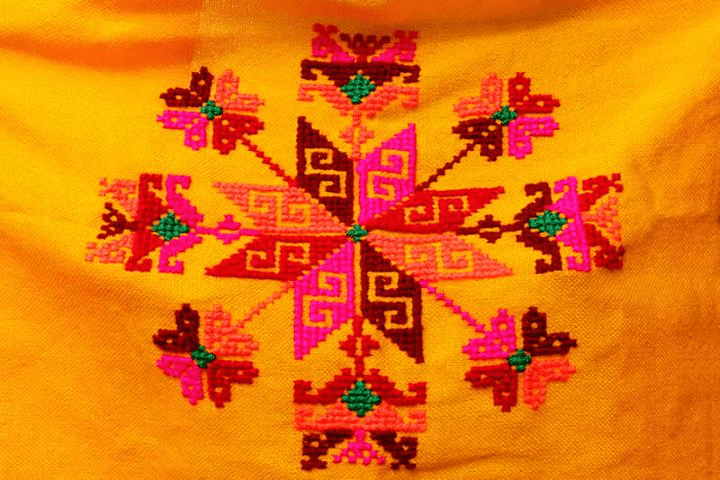
Each stitch of Oaxaca embroidery carries the legacy of their ancestors, with patterns often depicting natural elements, local myths, or reflections of their daily life. This embroidery is not merely decorative; it’s a narrative thread that binds the community to its roots and traditions. Wearing colorful, intricately designed Oaxaca clothing is a celebration of heritage and a visible assertion of their role in preserving their cultural practices.
There are no hard and fast rules in crazy quilting so I started the ball rolling by cutting rectangular panels of the Island Batik Colorburst collection into variables of 15 for the machine embroidery. Black and white rectangular panels were thrown in the mix as well. These panels were fused with interfacing as prep for machine embroidery.
HSTs were created from combos of Colorburst in two sizes. The Tucker Trimmer from Studio 180 Designs always helps keep those HST blocks crisp! Piano key blocks were created from HST scraps. My Oliso Project Iron was essential when ironing these HSTs on the Oliso wool mat!
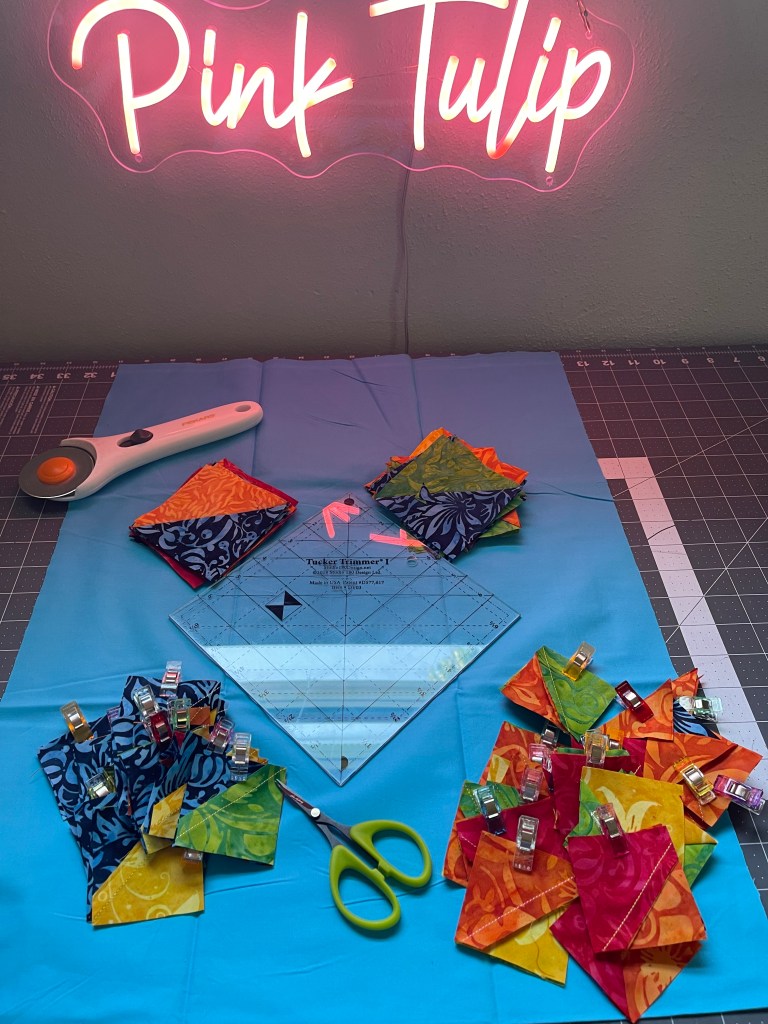
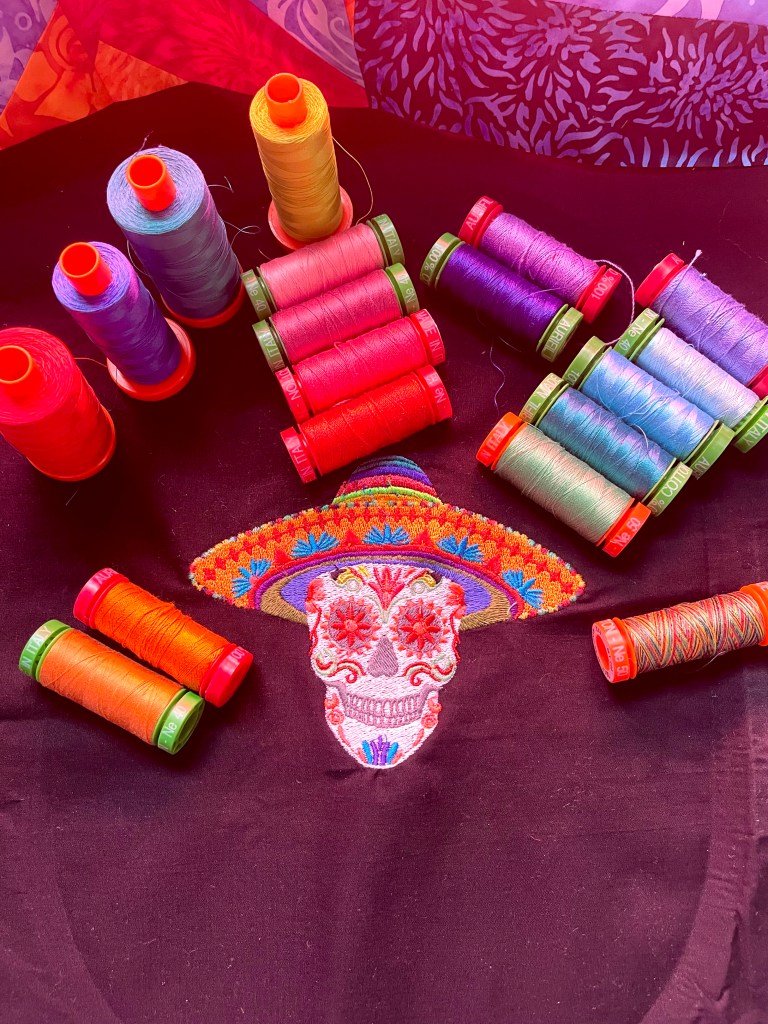
My collection of Aurifil thread served me well in this project. I used 12 wt for embroidery handwork, Aurifil’s 100% Cotton 12wt/2ply thread comes in all 270 Cotton colours and is wound on a red spool. For piecing I used 50 wt which is strong and thin, and results in remarkably flat and crisp seams. Aurifil’s 100% Cotton 40wt/2ply thread, wound on a green spool, was used for machine embroidery. I mixed and matched at times depending on the required color and task.
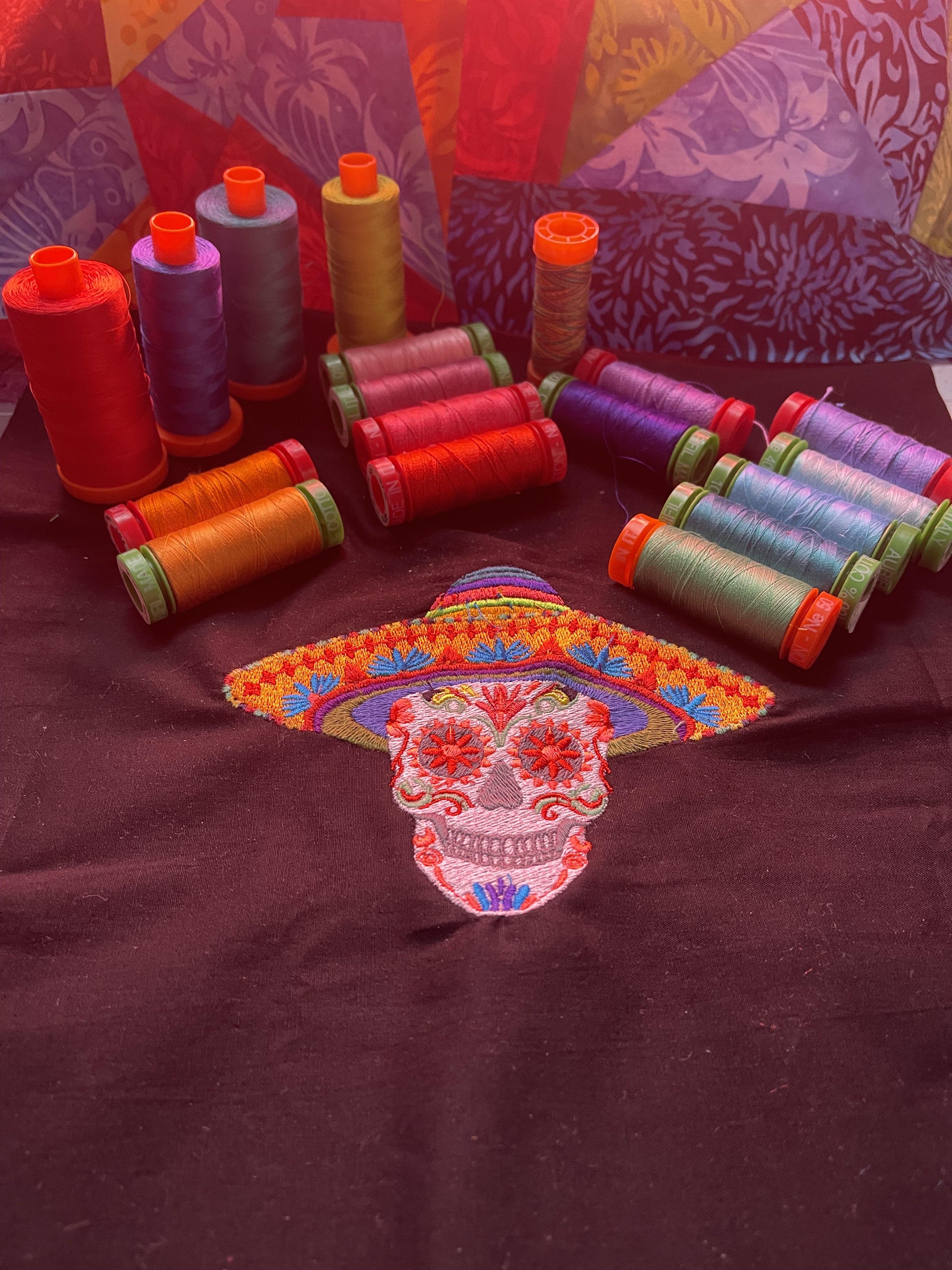
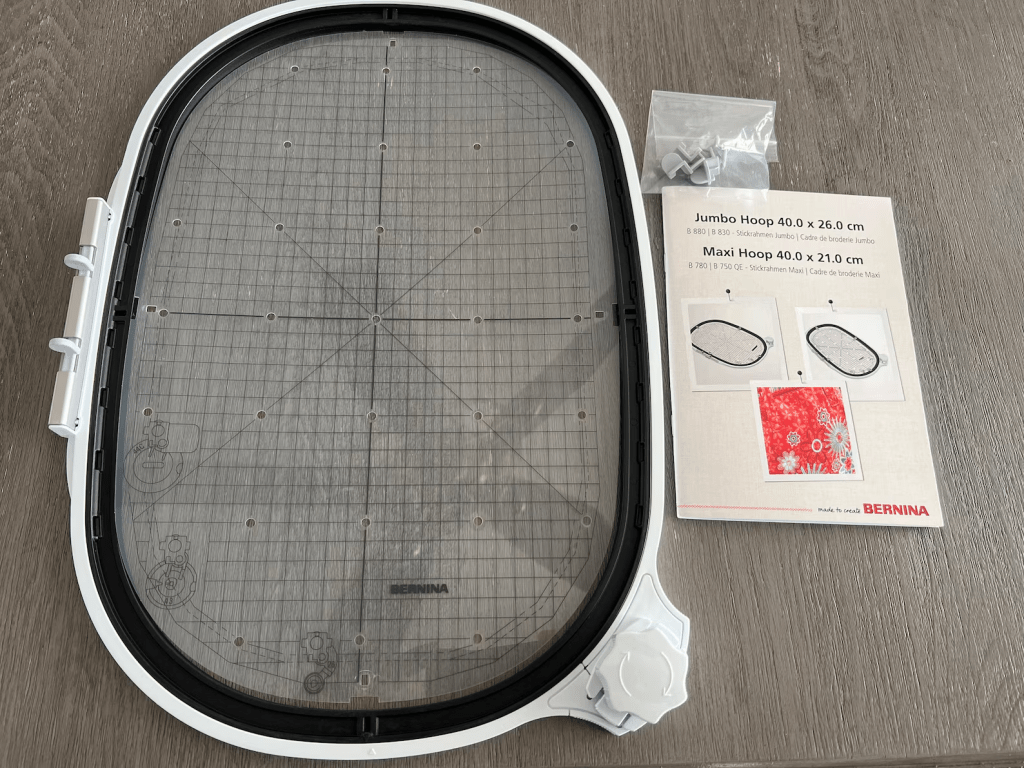
My Bernina B500 Embroidery Machine kicked out 26 embroidered panels. Many were already available in the machine’s library while others were downloaded from Etsy sellers. My favorite? The Sombrero Skull motif! The Bernina Midi Embroidery hoop was my machine embroidery sidekick because it has an ergonomic twist-lock-mechanism, the hoop can be opened with a pinch and closed with a twist.
The Bernina worked beautifully but after many embroidered panels were completed, I did have a thread jam. I cleared the jam after removing the bobbin casing and reinstalling. After replacing the bobbin housing, I always check (after years of experience) that my needle will work smoothly before moving forward with sewing. This time the needle was not and upon inspection the needle was bent. Then I realized that I should have been using a Schmetz Vinyl needle because of the fusible interfacing. The Schmetz vinyl needle is made for sewing with fusibles!
Birds are important in Mexican culture. Hummingbirds hold a special place in Mexican culture and folklore. Their speed and agility symbolize agility, energy, joy, and playfulness. In Aztec mythology, they were seen as spiritual warriors, and their fast flying represented diligence and endurance. The Aztecs believed that fallen warriors would return to earth as hummingbirds. There are two machine embroidered bird panels in the quilt both were fun to do; one is a hummingbird, and one is a stylized tinamou, the most ancient of birds.
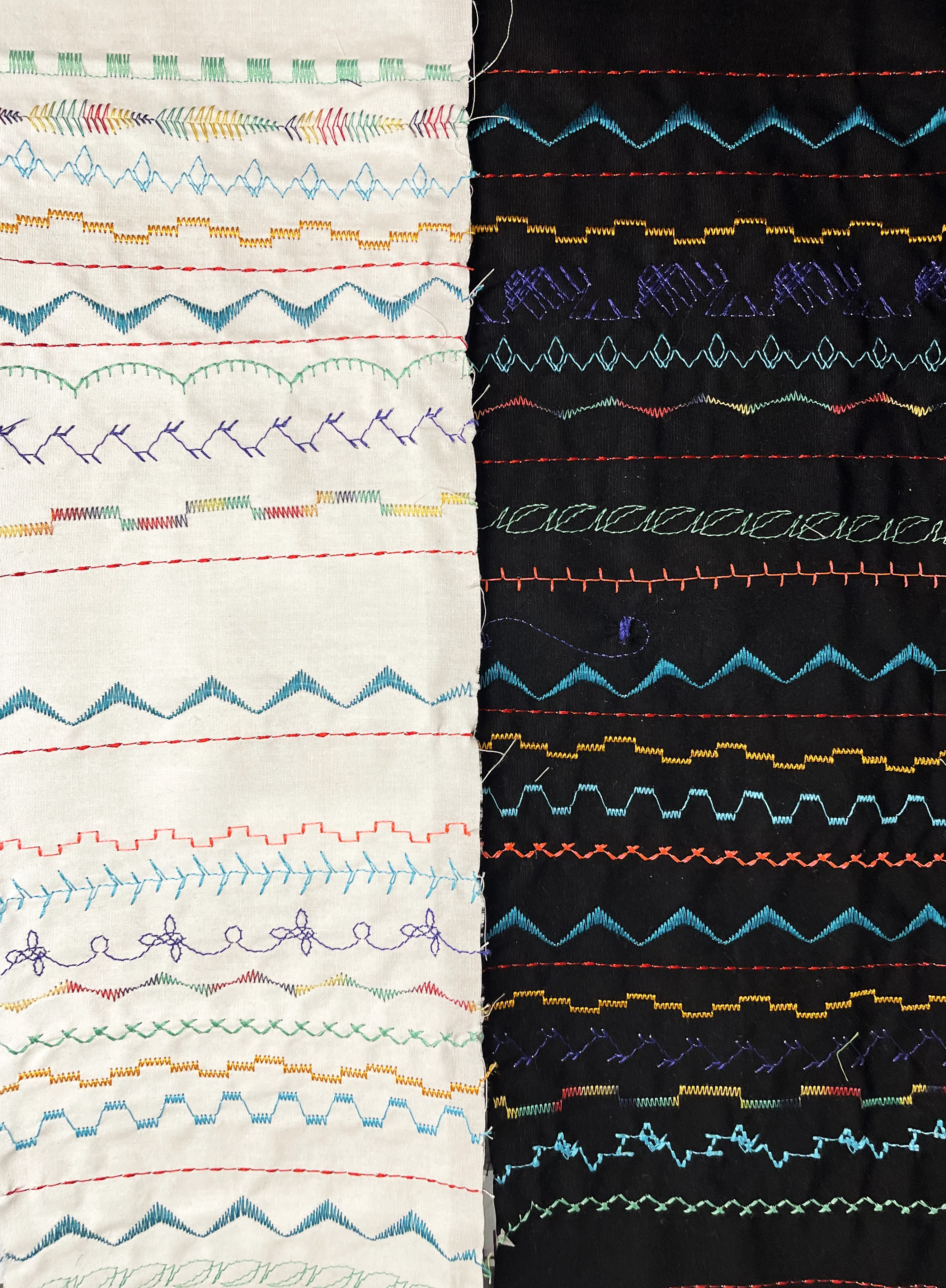
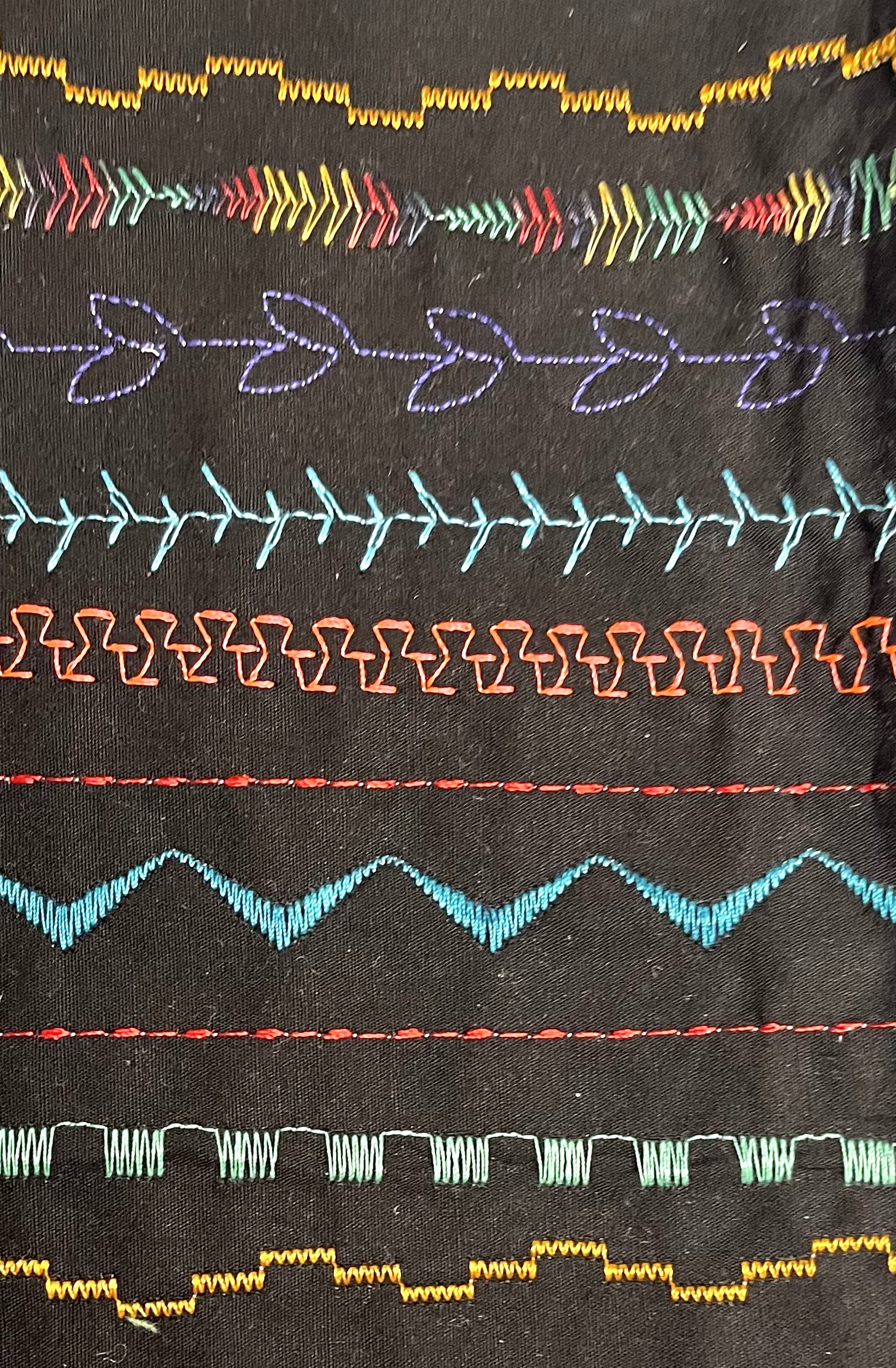
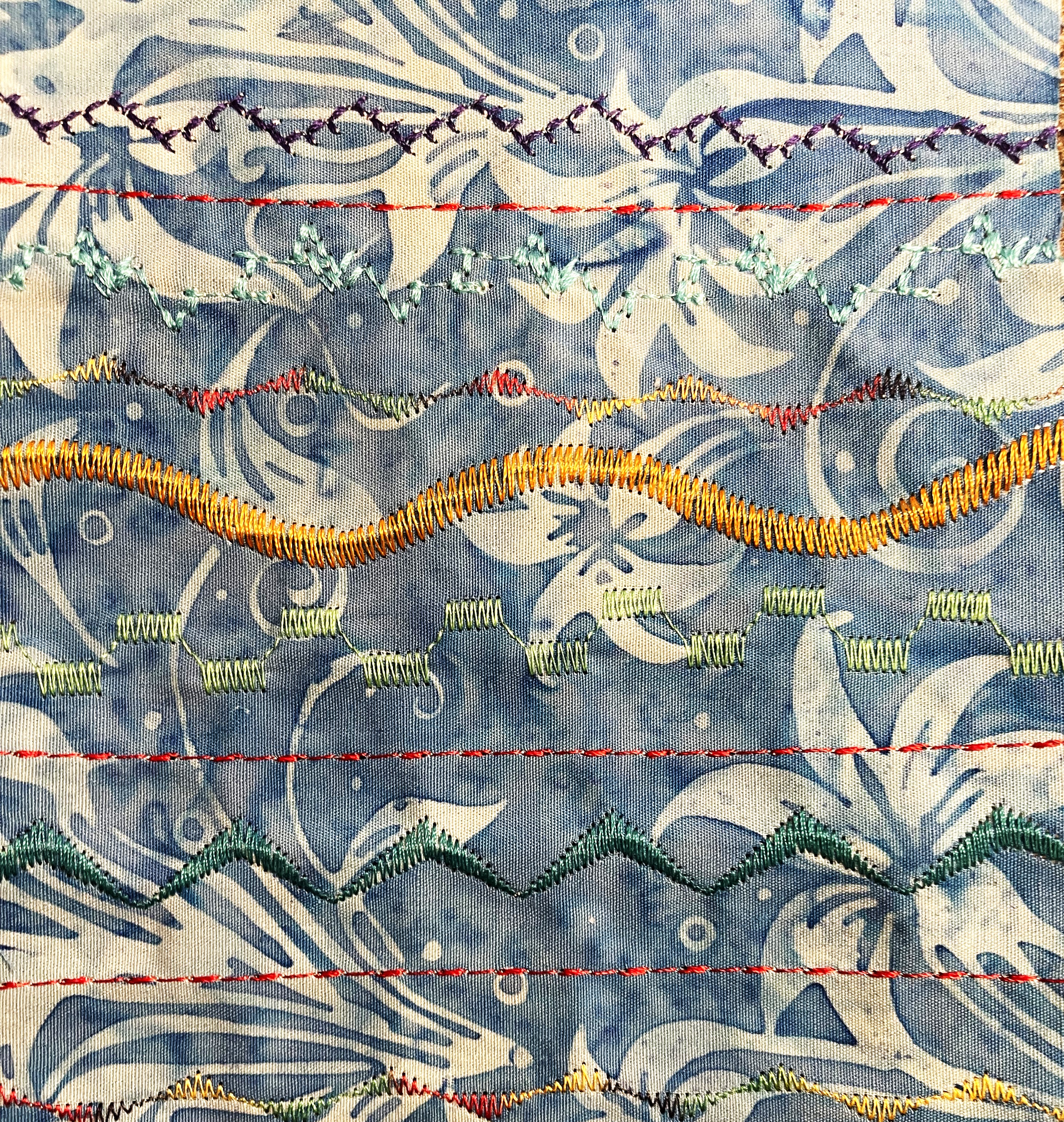
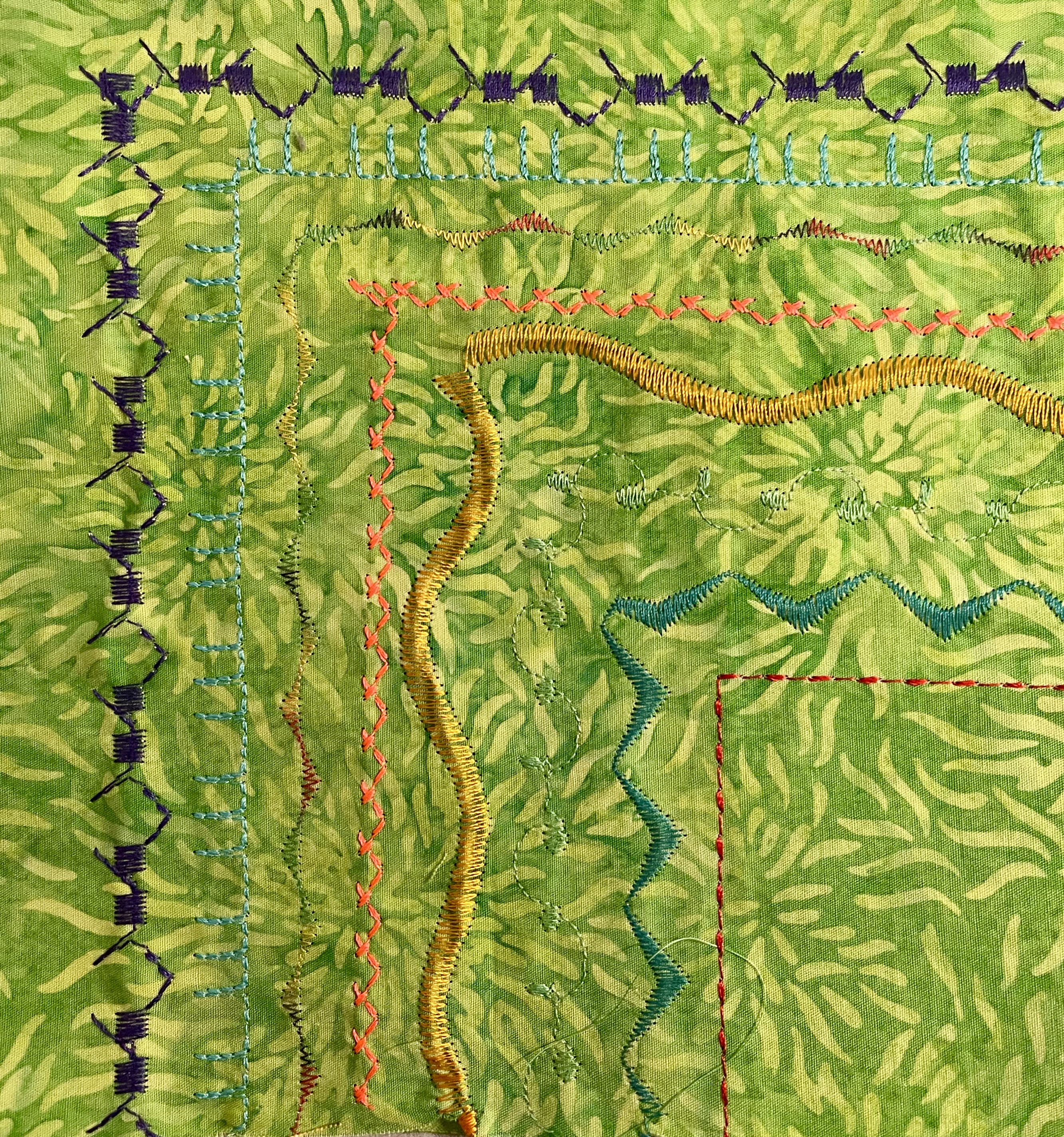
The library of stitches on my Brother Dreamweaver were also essentially as I created several blocks of sampler stiches which simulated the tapestry weaving of the Zapotec.
The design wall was essential to the layout especially since the quilt ended up being 72 x 92 inches! so helpful to identify best placement! Also a timesaver was the 6-yard cut of Platinum provided by Island Batik which was cut in 3-yard lengths and sewn together to create the back. (Sewn at midnight the night before dropping off to the longarmer!)
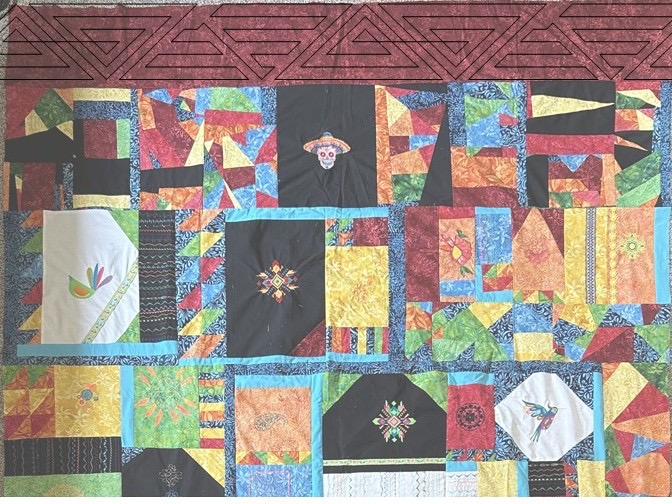
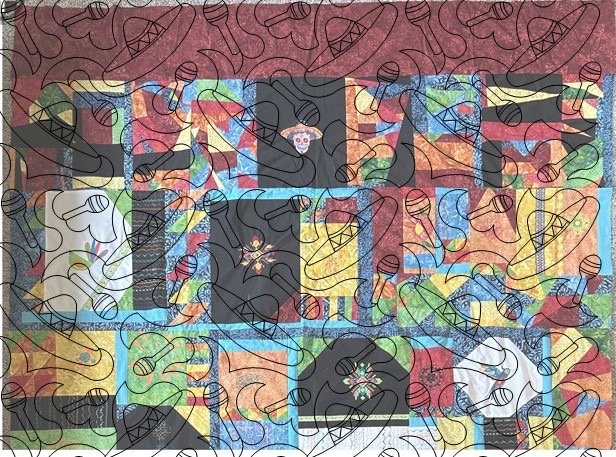
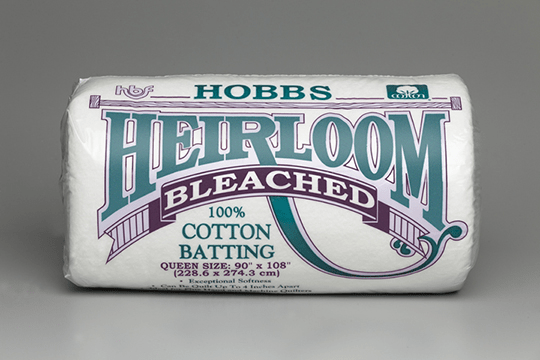
Longarmer, Ruth McCormick, is a wonderful collaborator and always loves the choice of Hobbs batting I bring. This time the batting chosen was Hobbs Heirloom Bleached Cotton. Hobbs Heirloom® Bleached 100% Cotton Batting is created specifically for use in quilts made with white or light-colored fabrics. Since I had a light backing and white blocks in the quilt–it was the best choice and so thankful Hobbs provided!
Ruth sent me four initial choices for quilting options. I had two favorites, but the sombrero and maracas motif was chosen after I investigated how those two items were meaningful to Mexican culture.
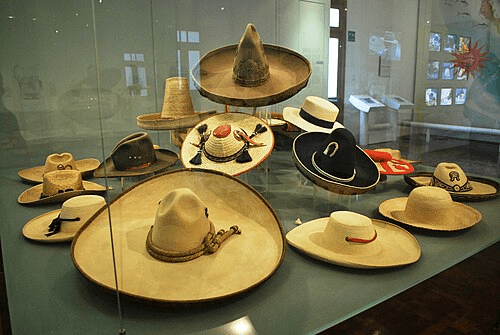
The sombrero is undoubtedly one of the most iconic representations of Mexican culture. The hat has roots stretching back hundreds of years, possibly as early as the 15th century. High crowns provide insulation, and wide brims provide shade (sombra in Spanish). Sombreros are usually made of natural fibers and can be plain or highly elaborate with embroidery. Over time, the sombrero’s functional design evolved to reflect the social status, occupation, and even the region of the wearer. It is a symbol of Mexican identity and pride and plays a central role in traditional dances like the Jarabe Tapatío (Mexican Hat Dance). Highly ornate sombreros are often worn by mariachi musicians and charros (Mexican horsemen), while simpler, straw versions are favored by laborers for their practicality. Sombreros and maracas are musically entwined!
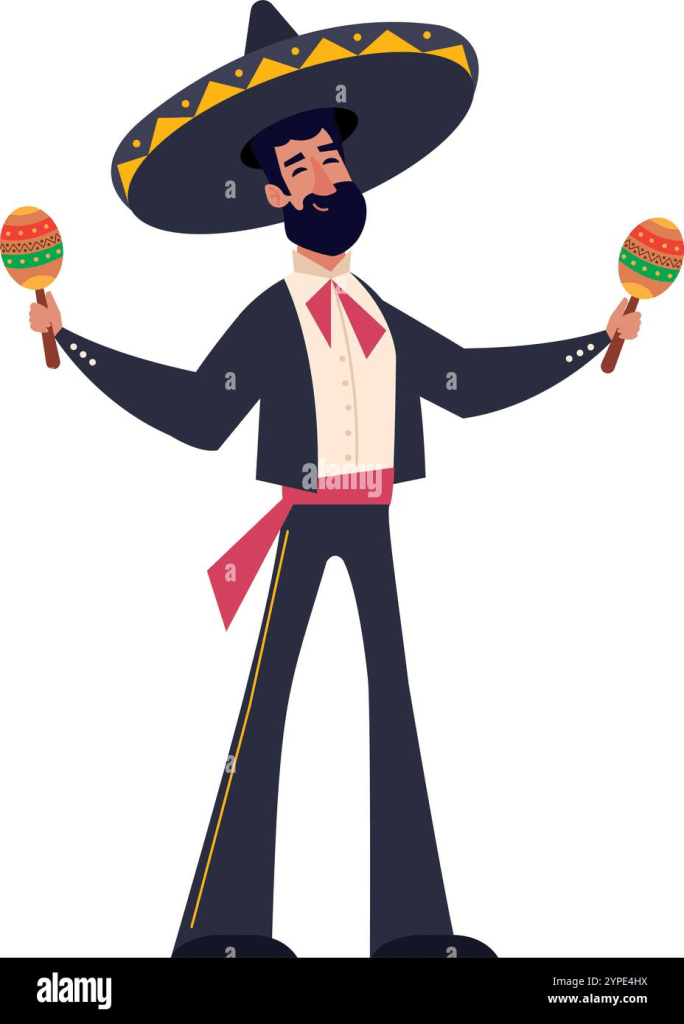
The maraca is of pre-Columbian origin and is believed to have been used by indigenous peoples of South America and the Caribbean for ceremonial and communicative purposes. Some attribute its invention to groups such as the Arawak and Taíno peoples. Maracas were rattles of divination found with other Indigenous ethnic groups, such as the Guarani and Orinoco of Florida. Modern day Latin American popular music, one maraca may be used (as in bomba), while other styles require a pair played simultaneously.
Quilt embellishments were accomplished after quilting but prepped while I waited for the longarmer. Pinterest is my go-to for embroidery stitches and I found a wonderful resource for a dictionary of stitches. Sharon Boggon of Pintangle is an authority on crazy quilting. Pintangle’s focus is on hand embroidery, slow stitch and crazy quilting. You will find tutorials, free patterns, stitch instructions, tips, a way to relax and stitchers eye candy! This page reminded me that we can create our own colorways by combining threads–two or three threads twisted to create a unique embroidery option.
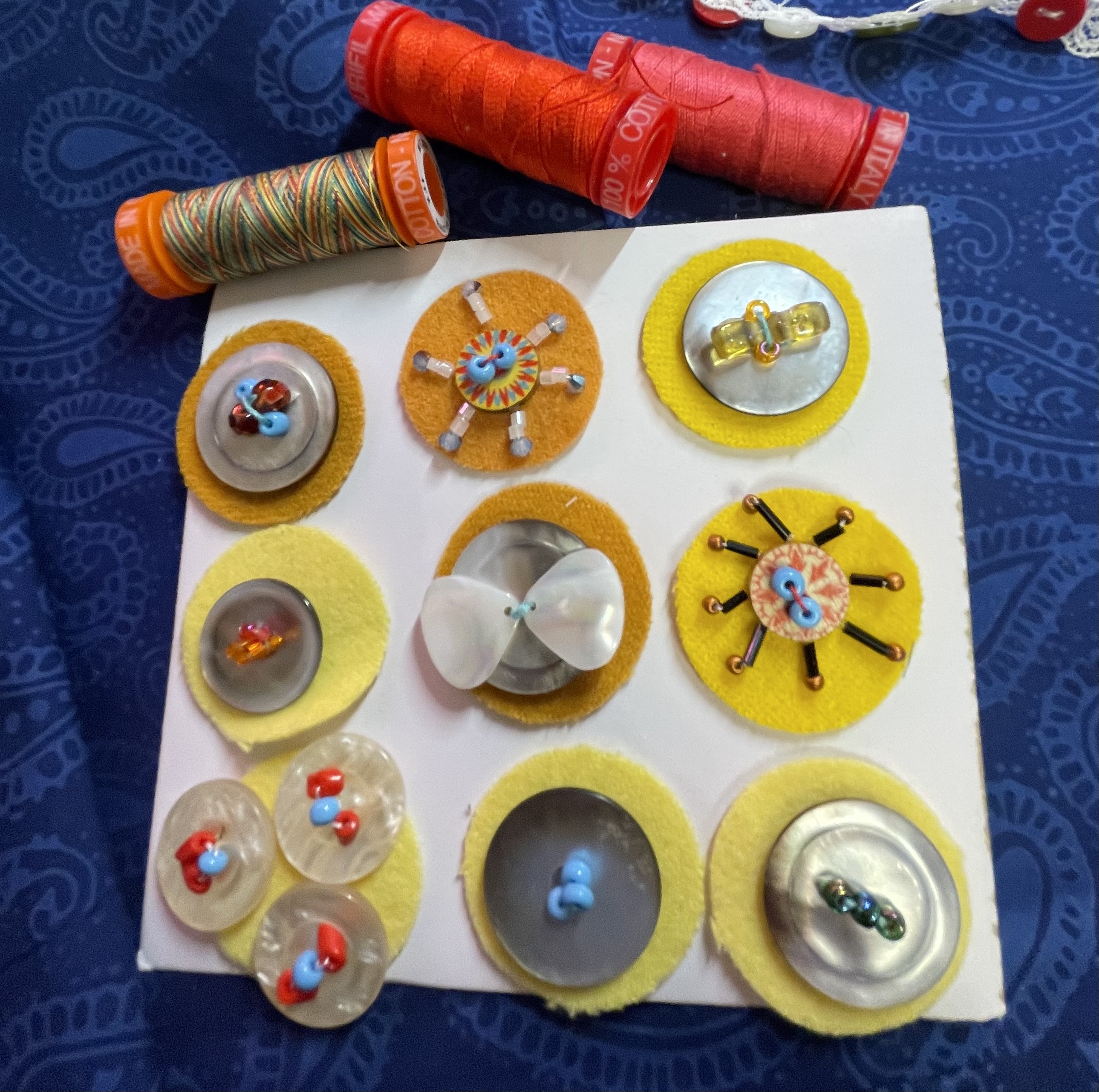
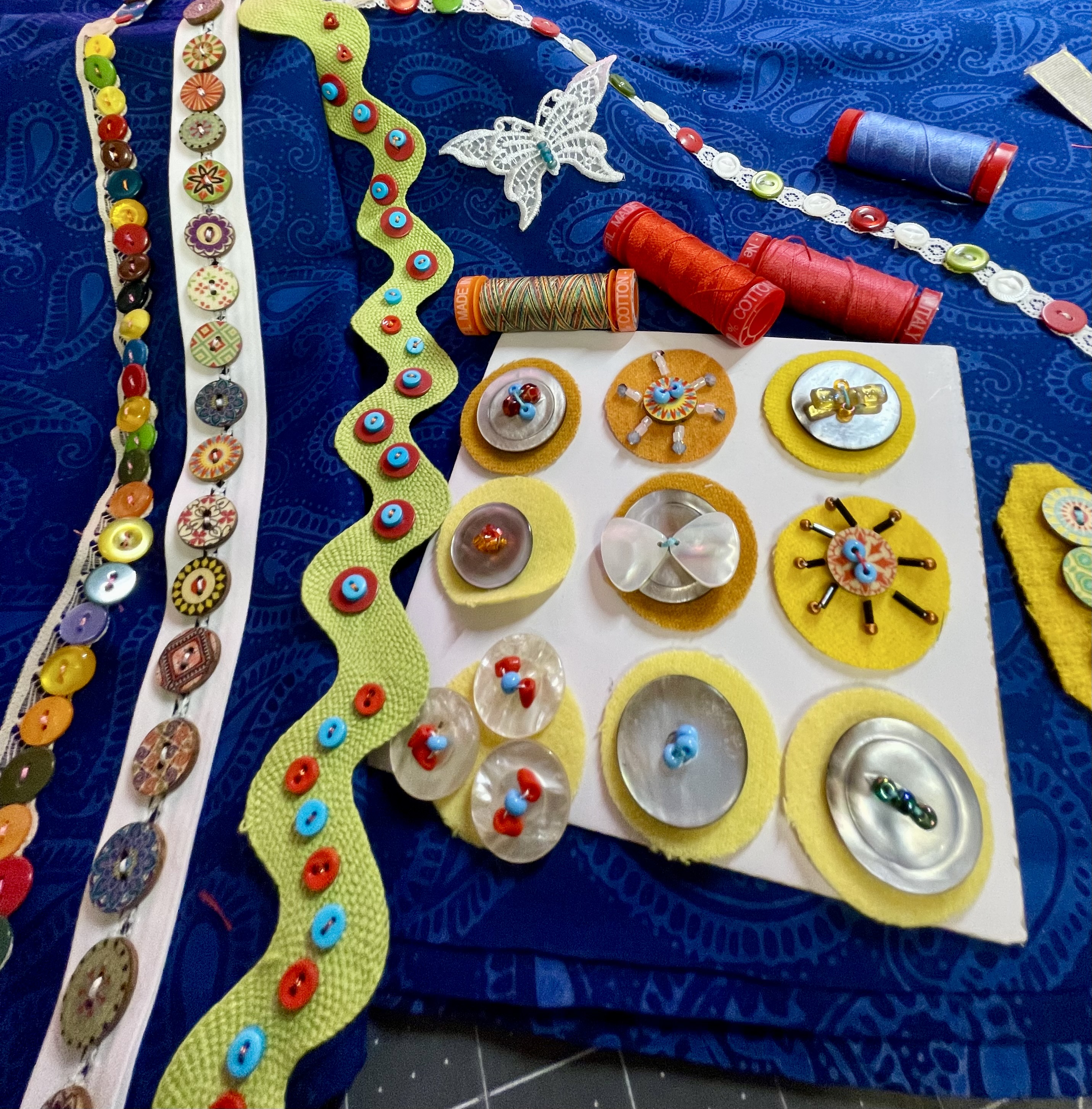
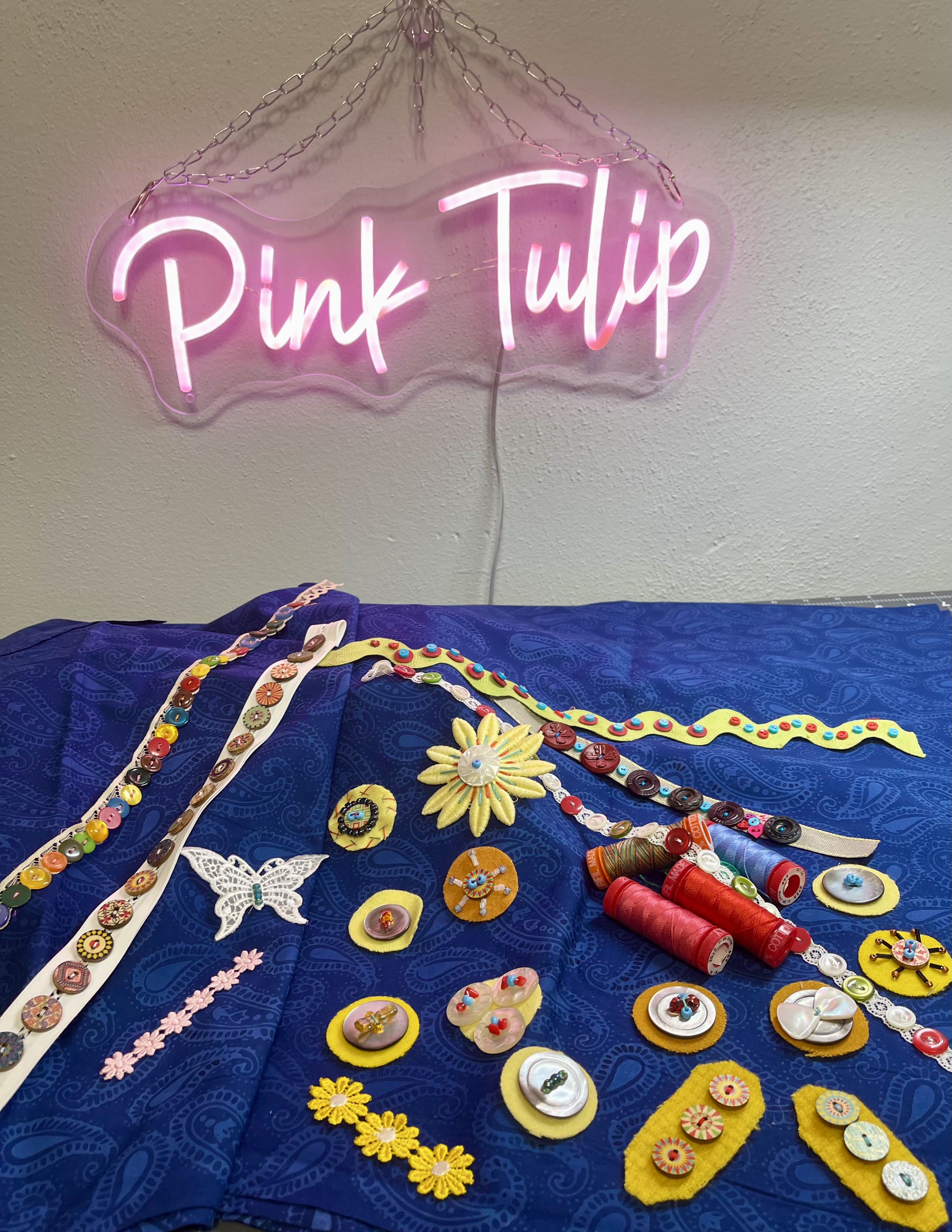
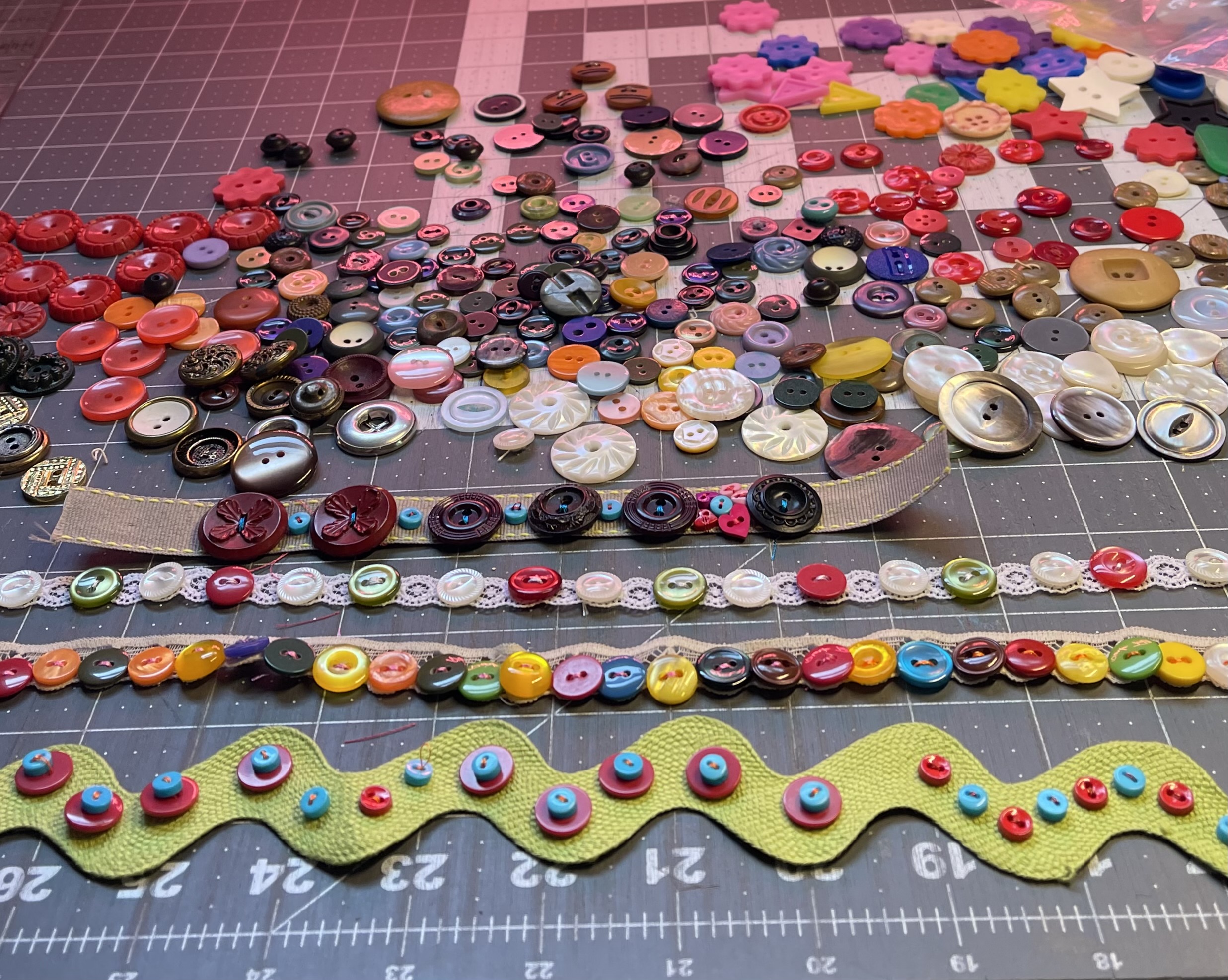
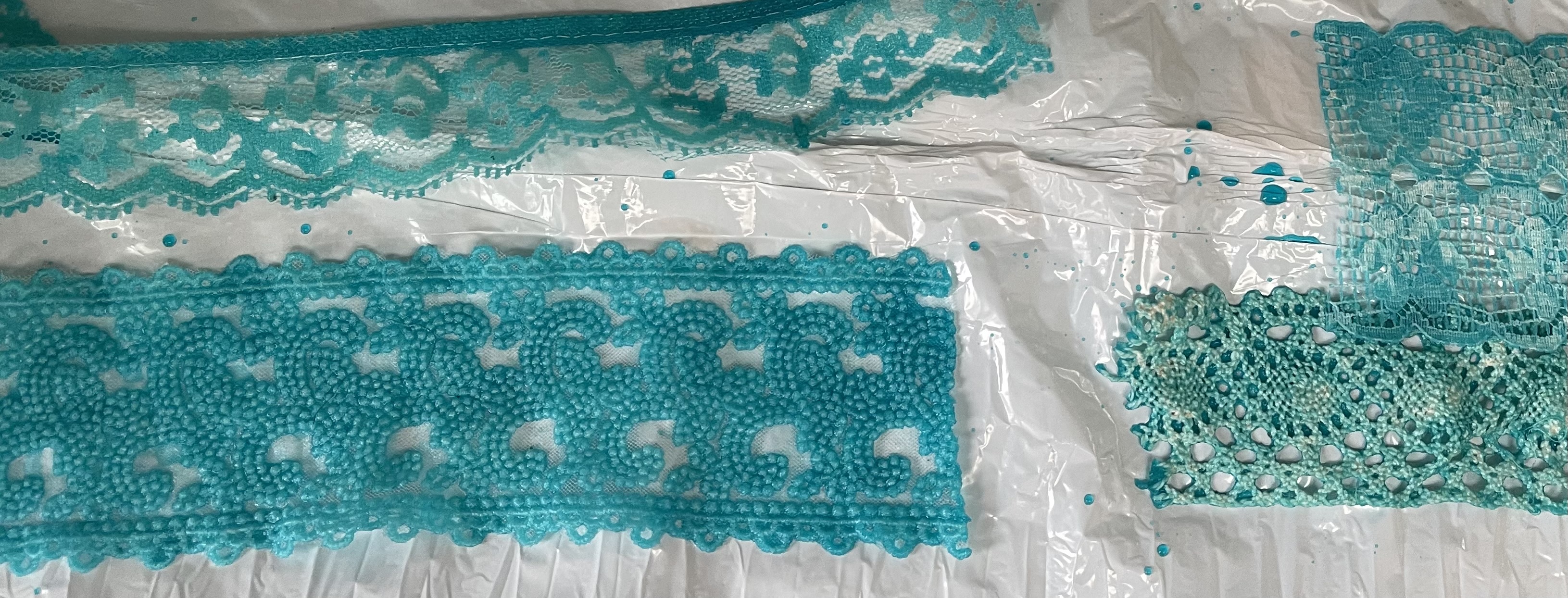
The only purchases for this quilt’s embellishments were a set of mini turquoise and a set of hispanic themed wooden buttons and some dye for pieces of vintage lace.
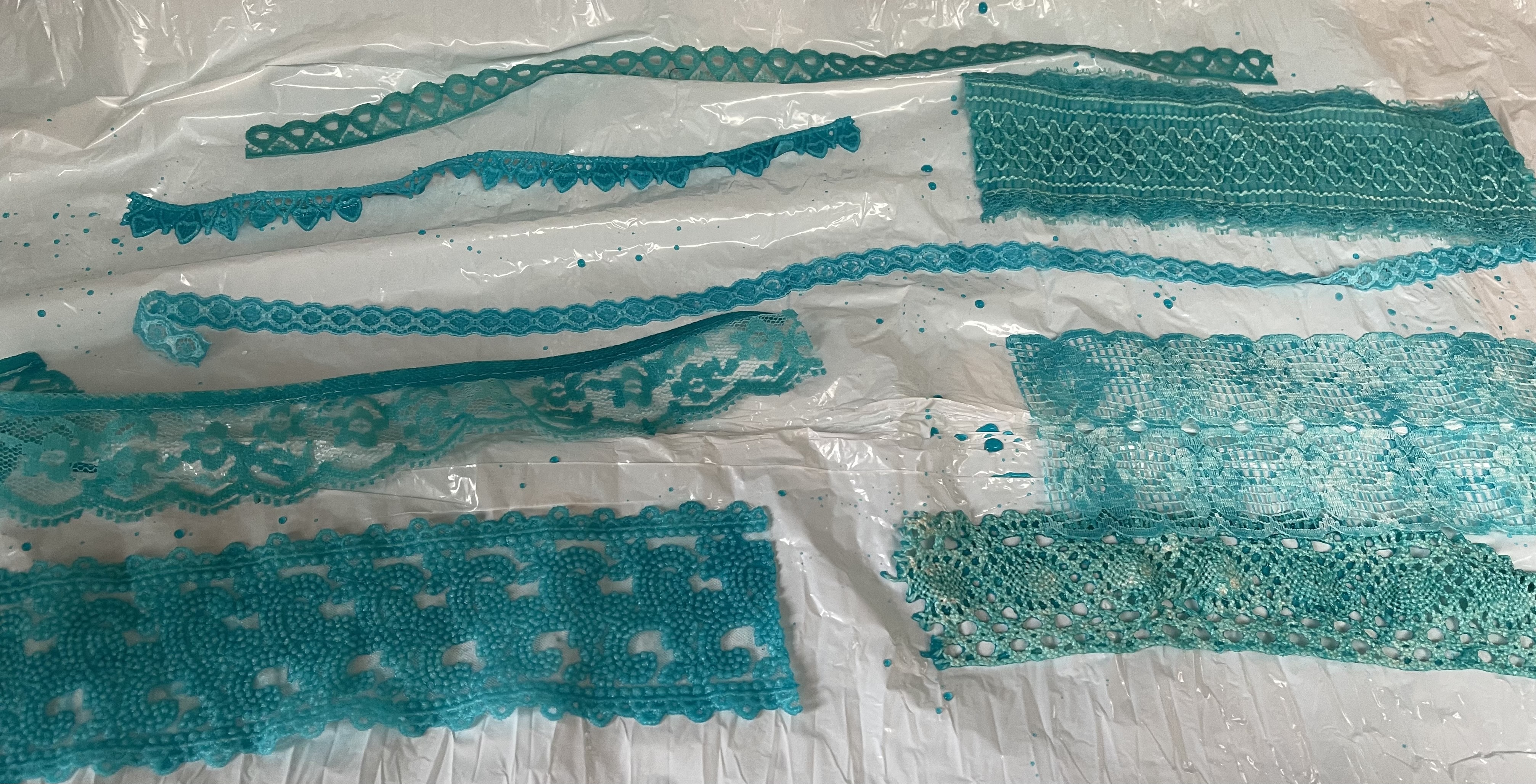
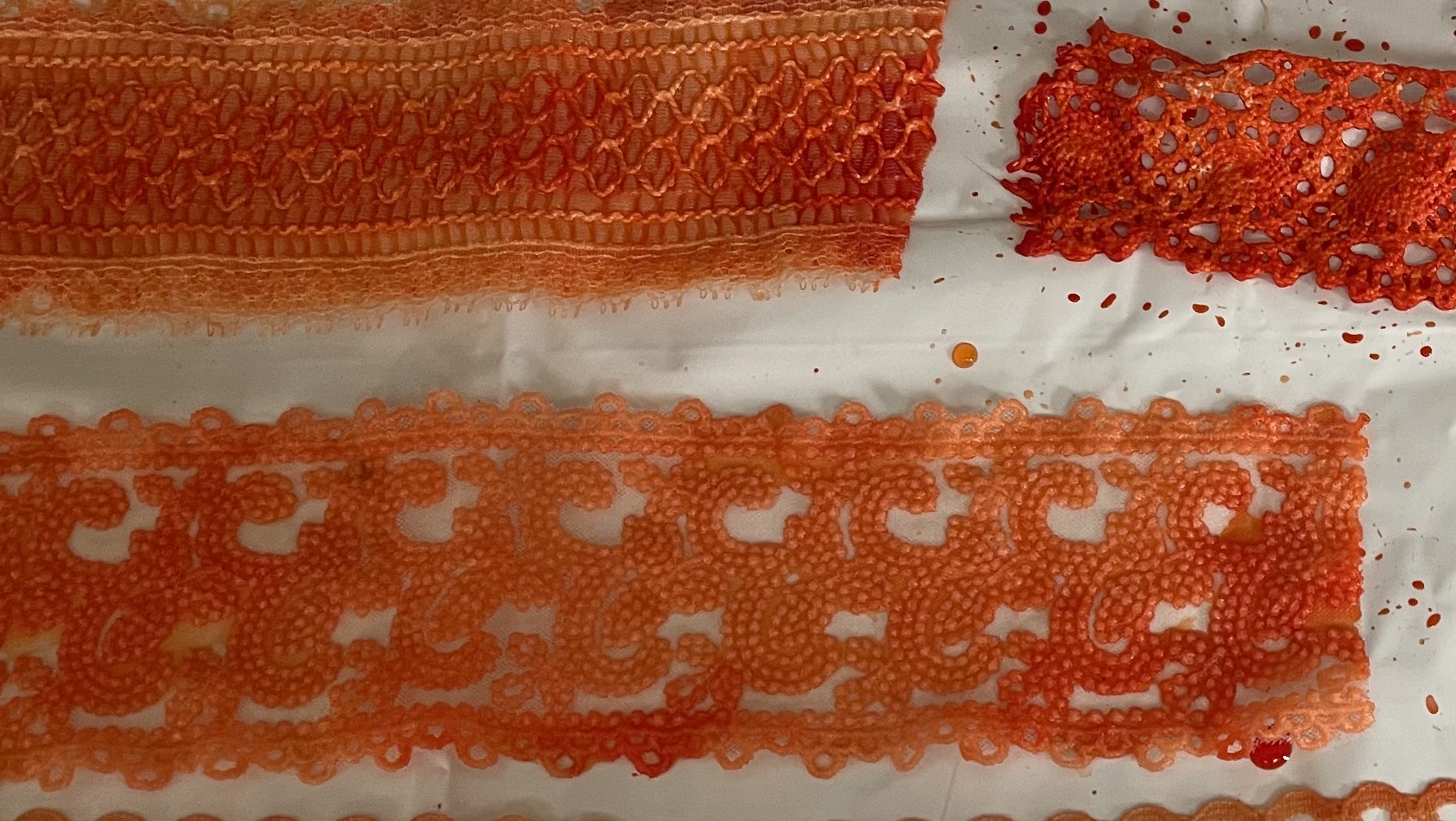
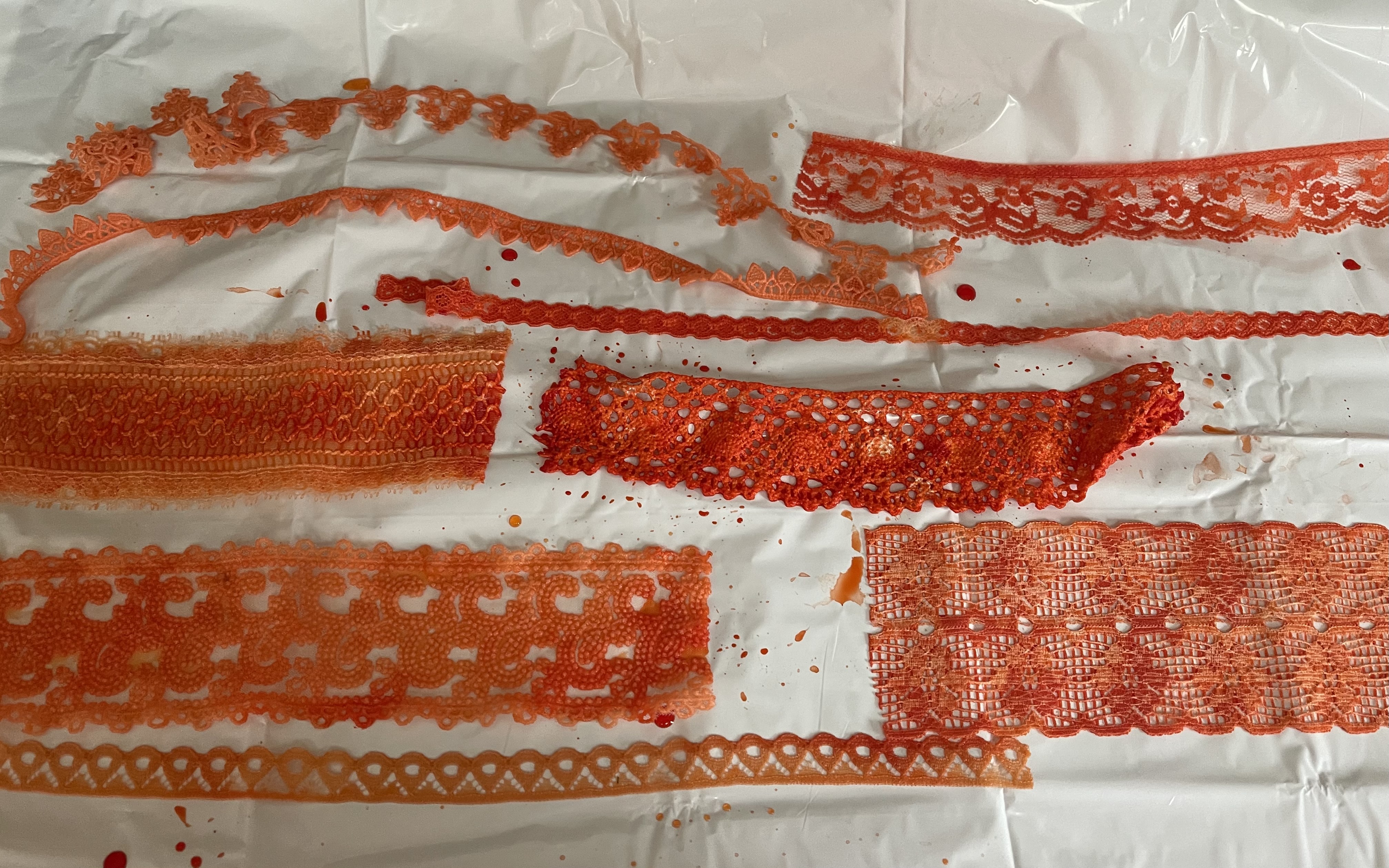
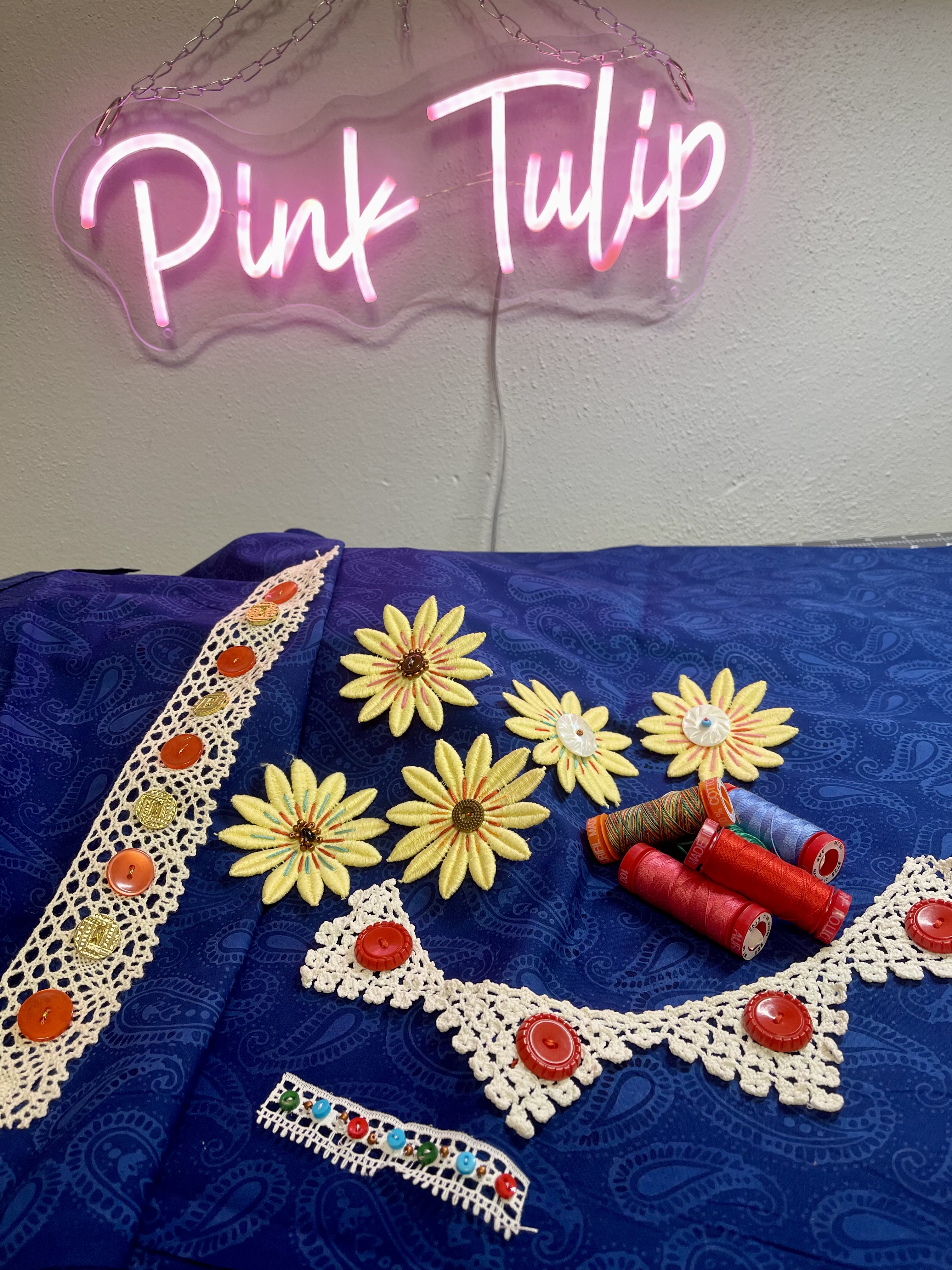
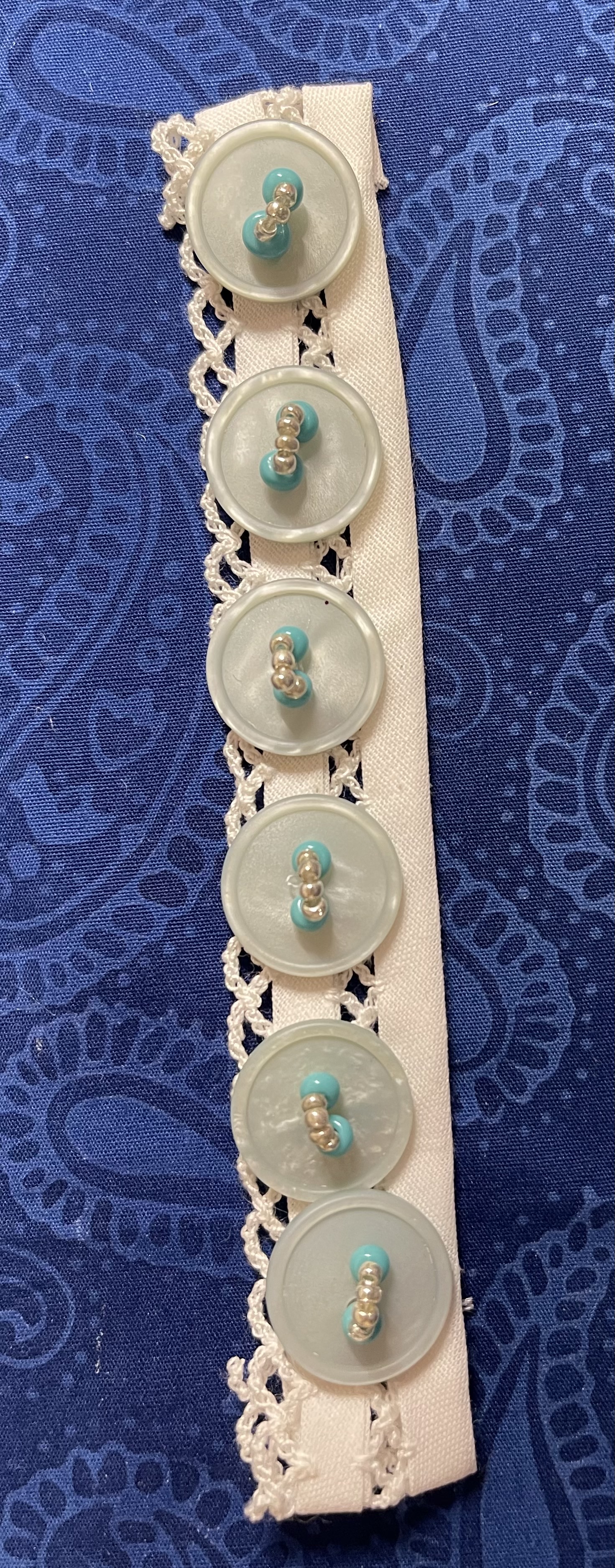
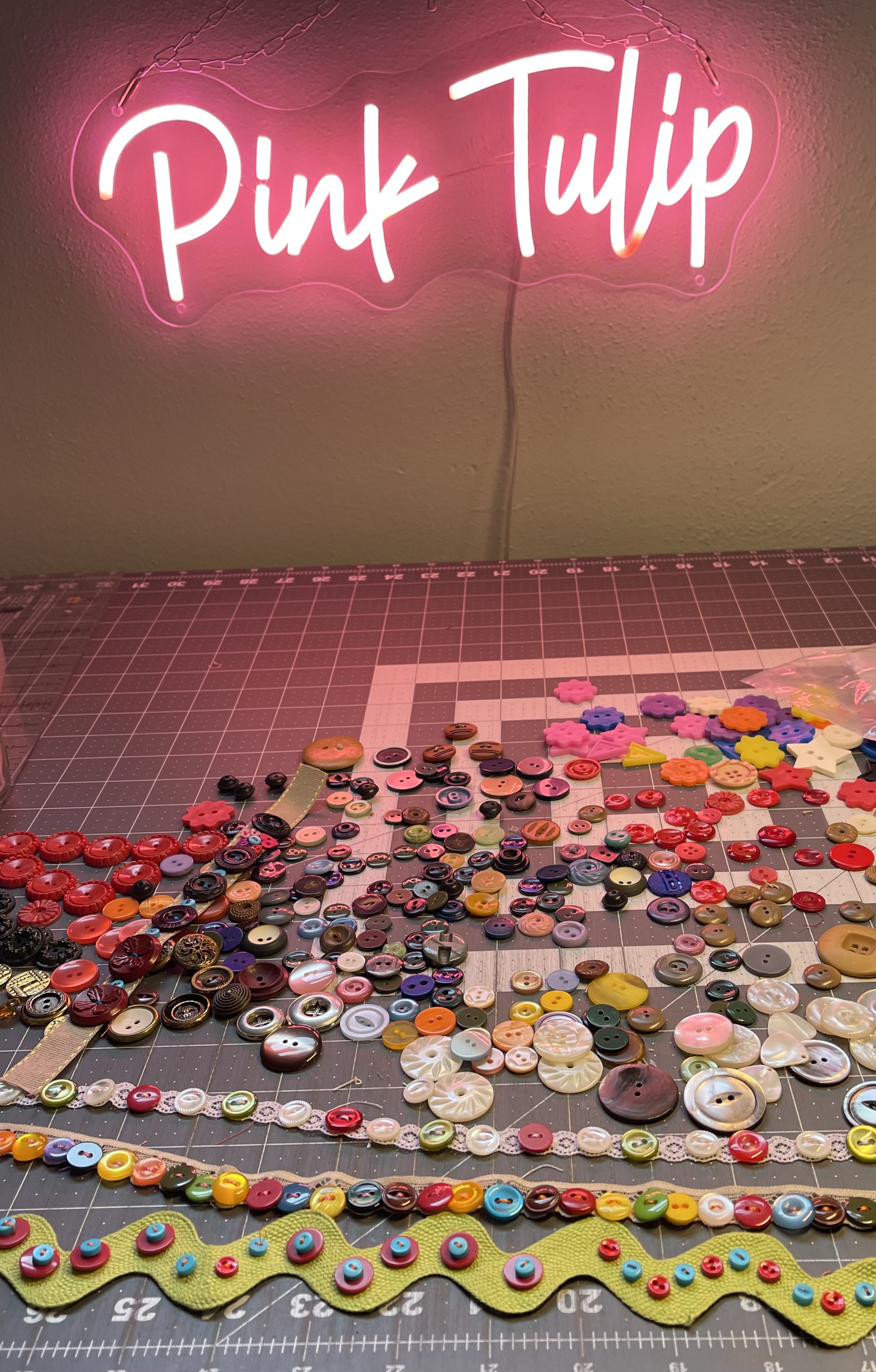
When the quilt went to the longarmer, I wanted to start working on the embellishments, so I went ahead and started sewing buttons and beads to strips of vintage ribbon and lace. This task was preceded by lots of button box searches (and reorganizing of button boxes) for two-hole buttons which would definitely speed up the process for me!
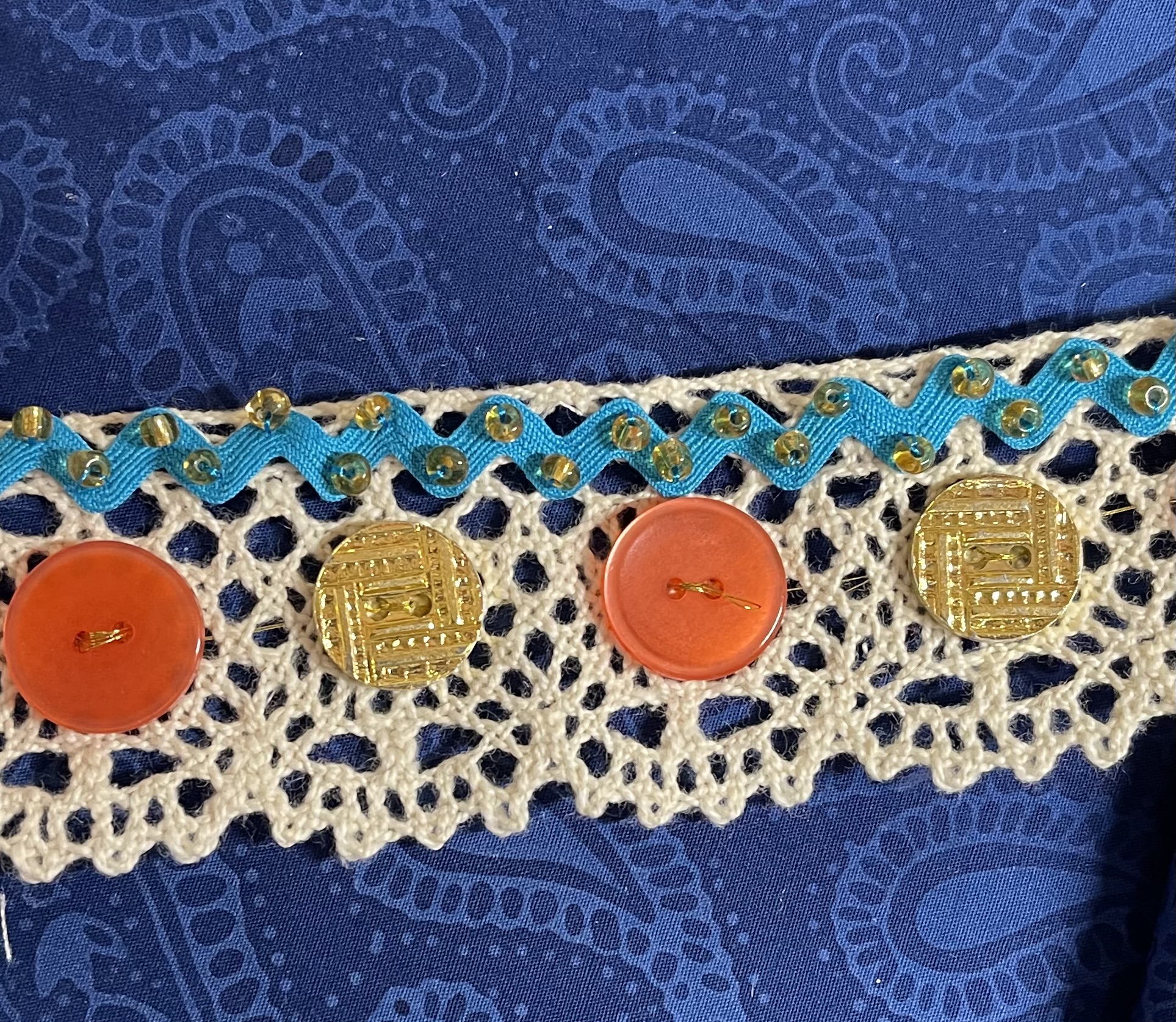
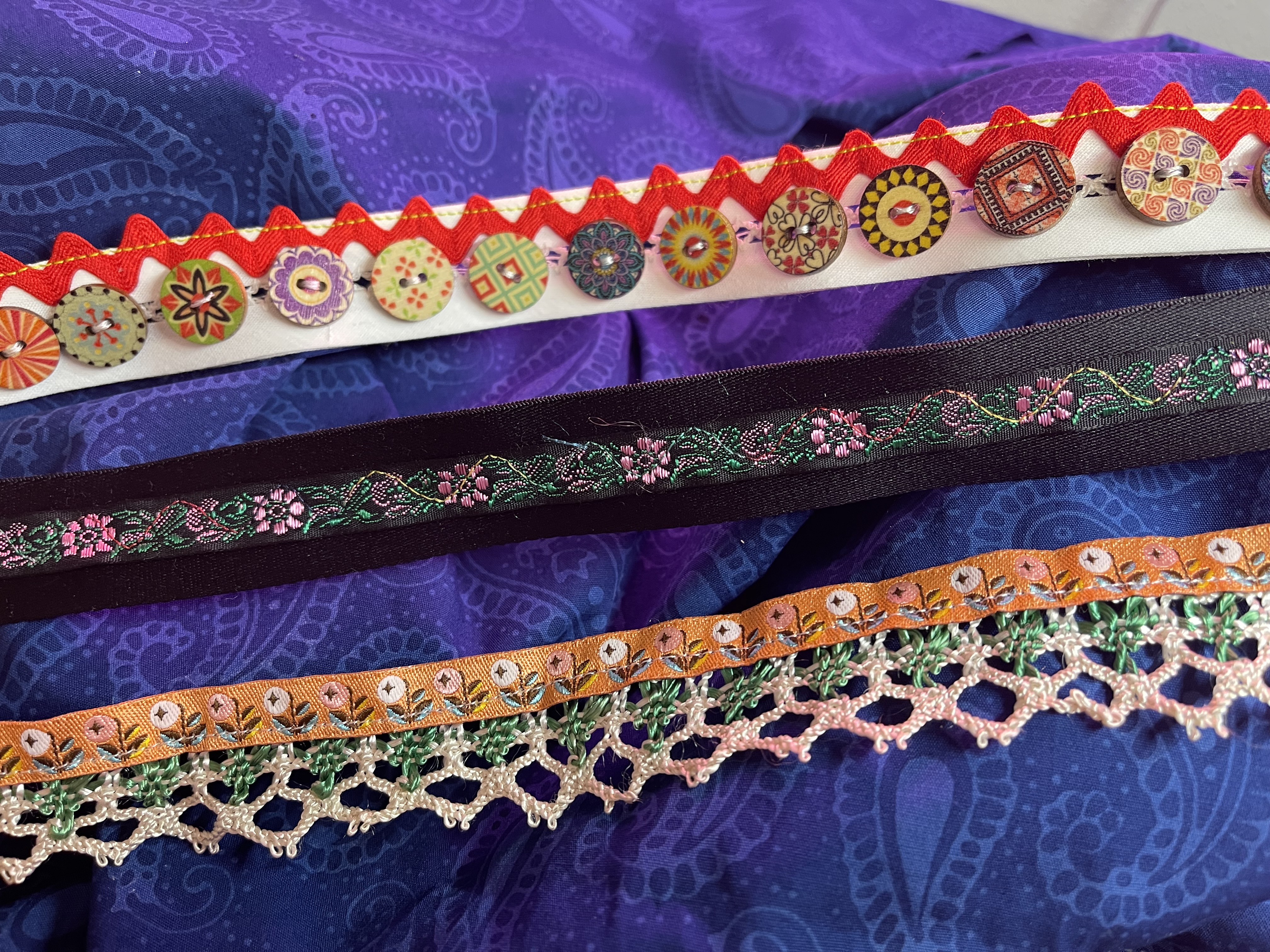
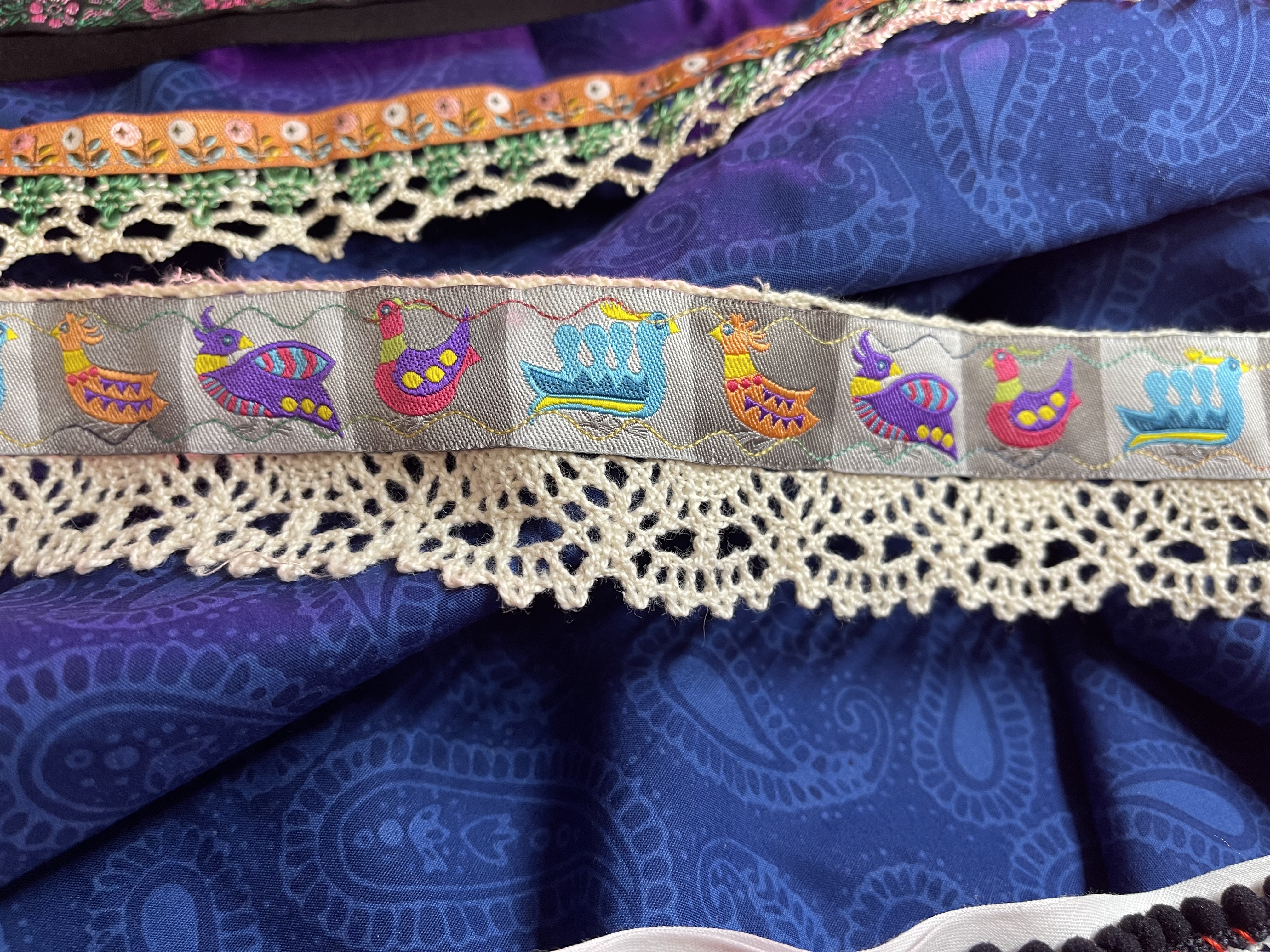
The trim and ribbon storage also was searched which led to the discovery of Jane Sassaman ribbons with one that matched perfectly to the folk-art tinamou bird mentioned earlier! That was a fun find! A 3-inch vintage yellow daisy trim were snipped apart and with individual daisies festooned with beads and thread.
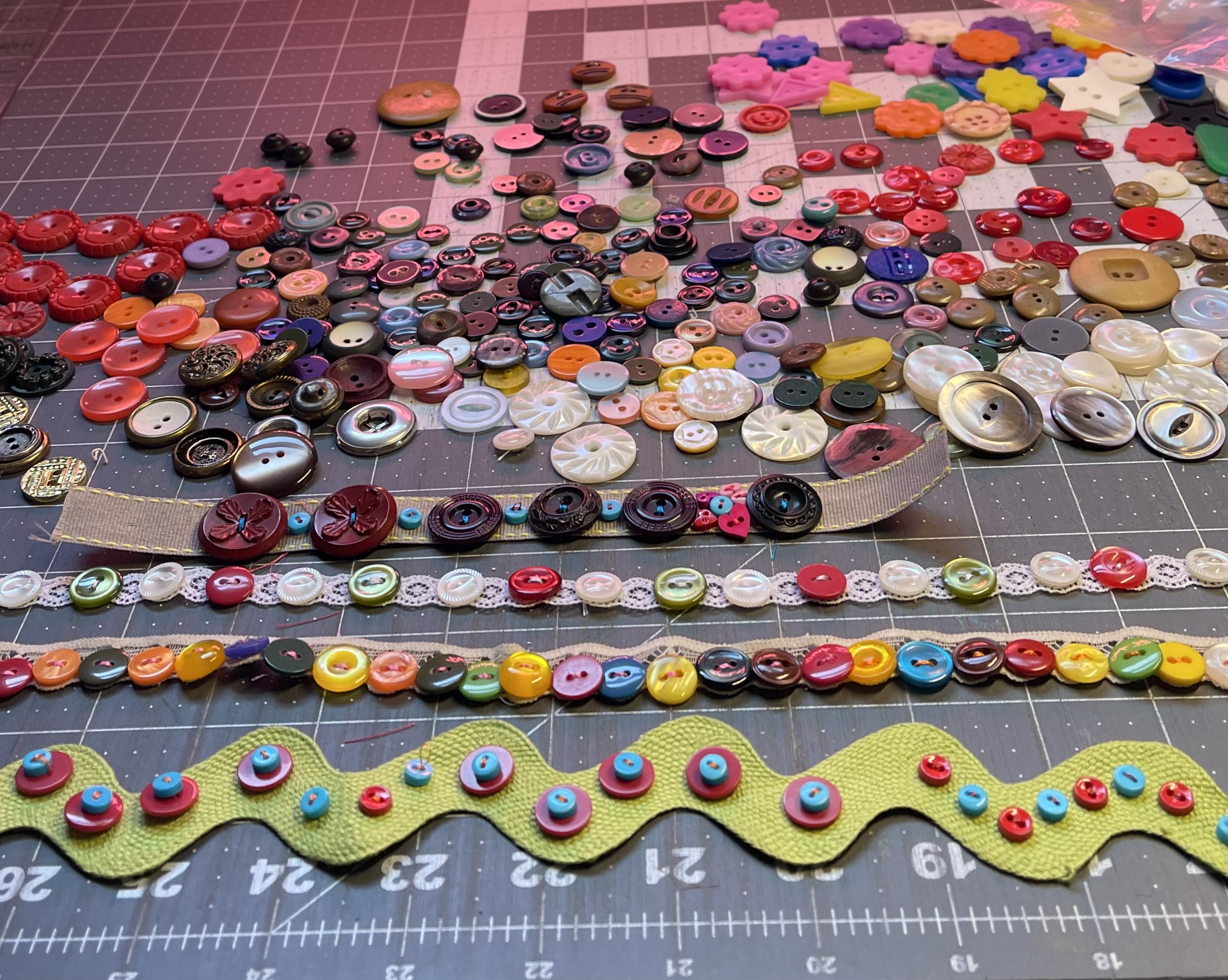
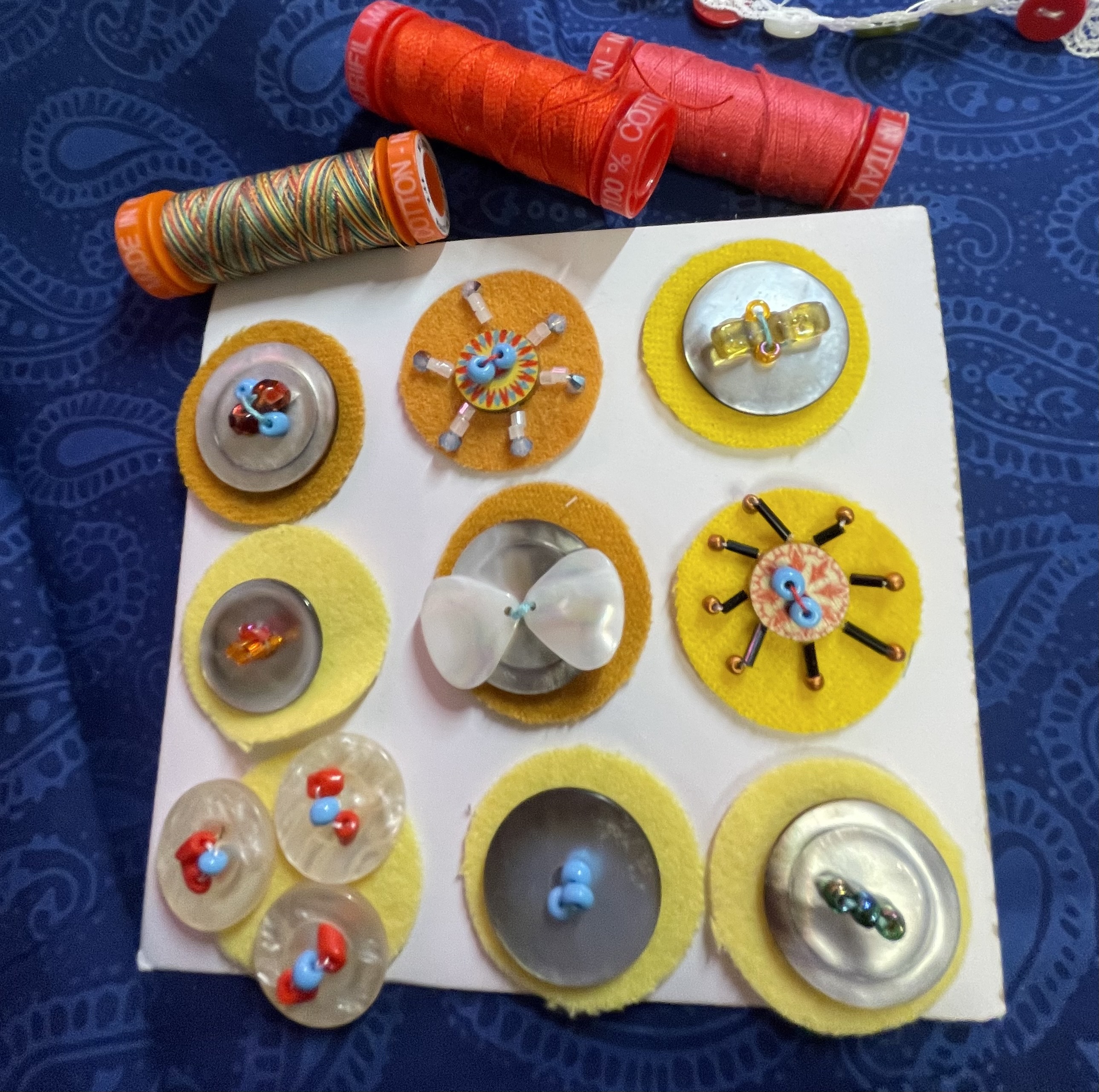
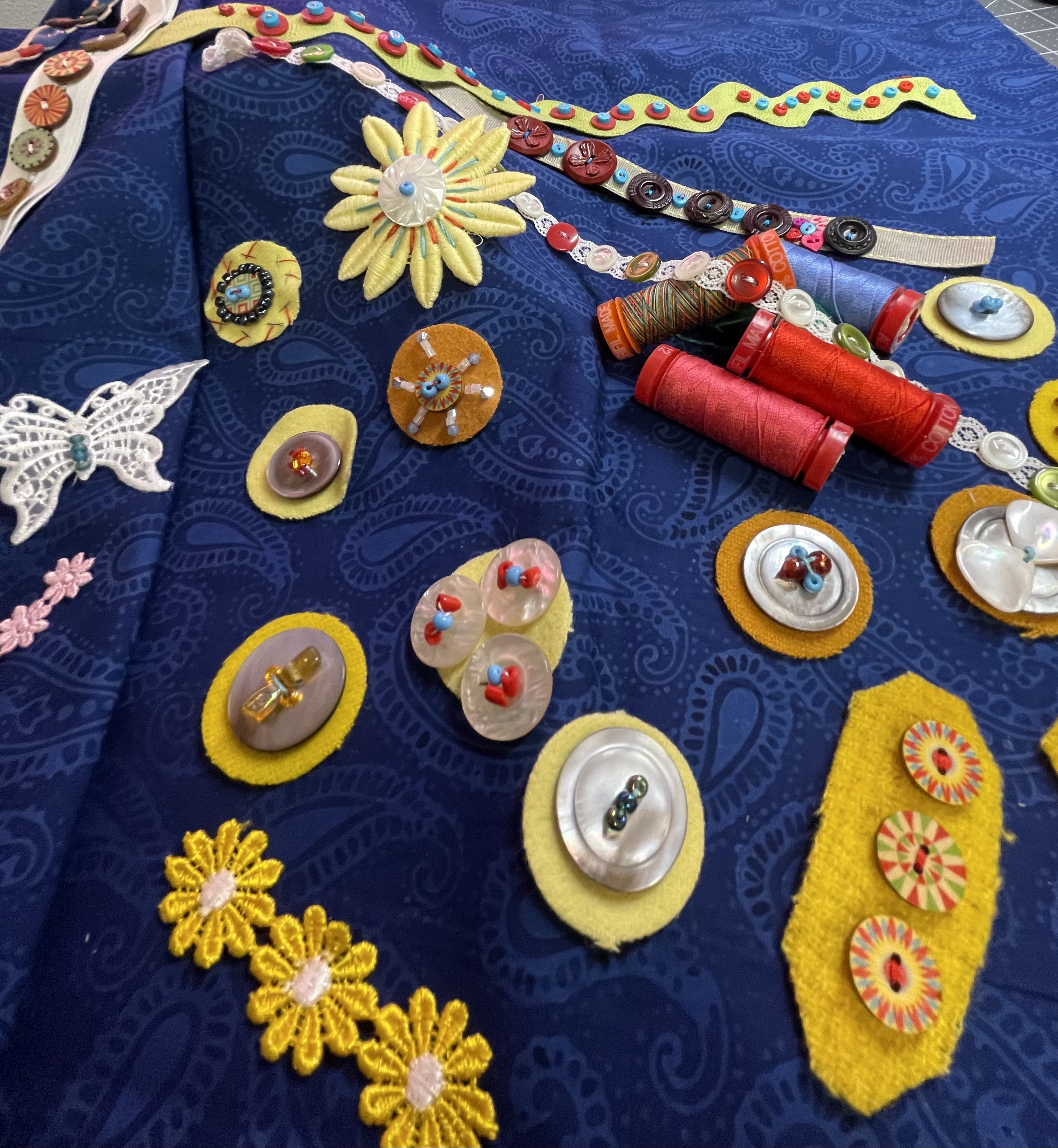
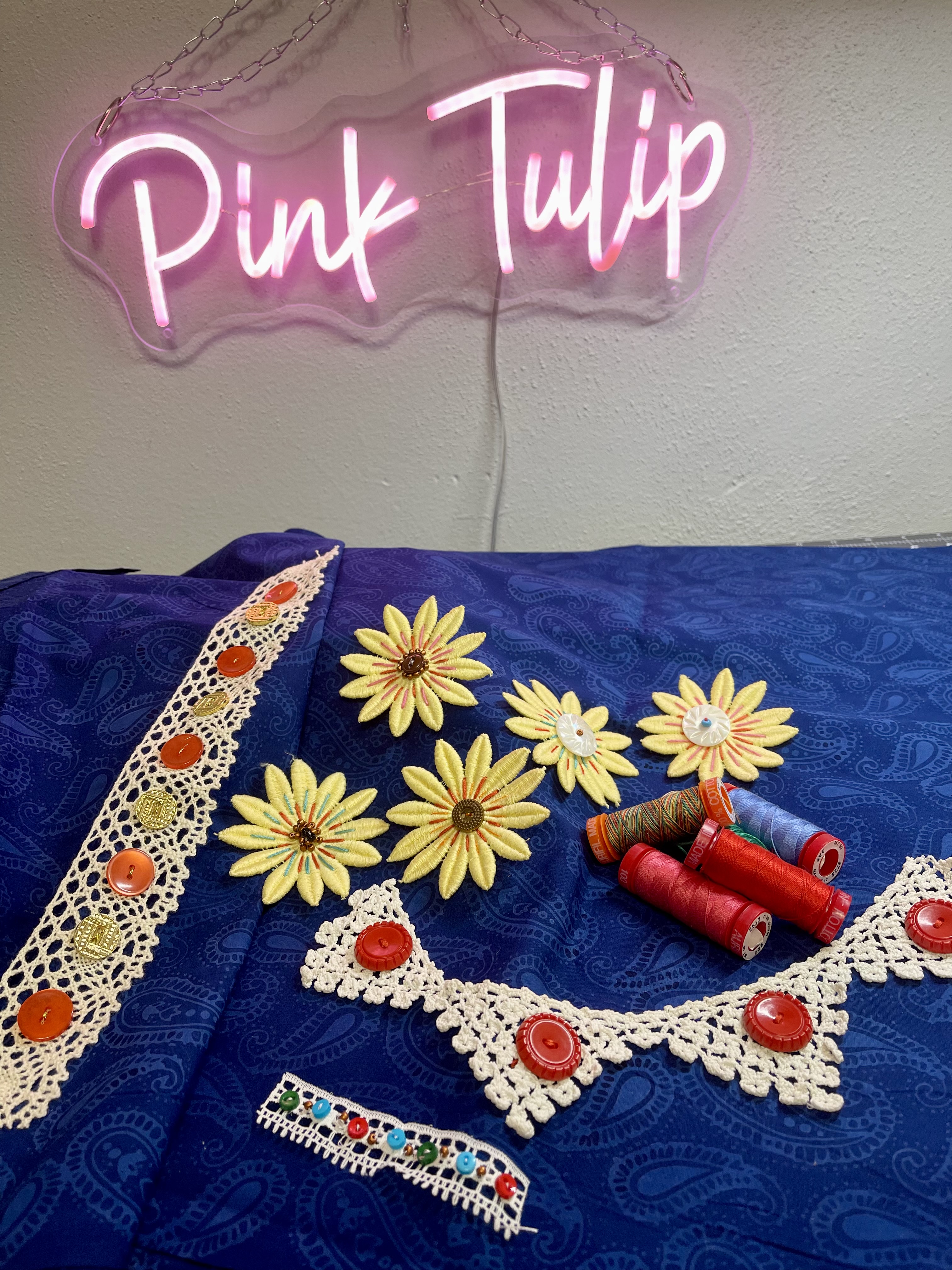
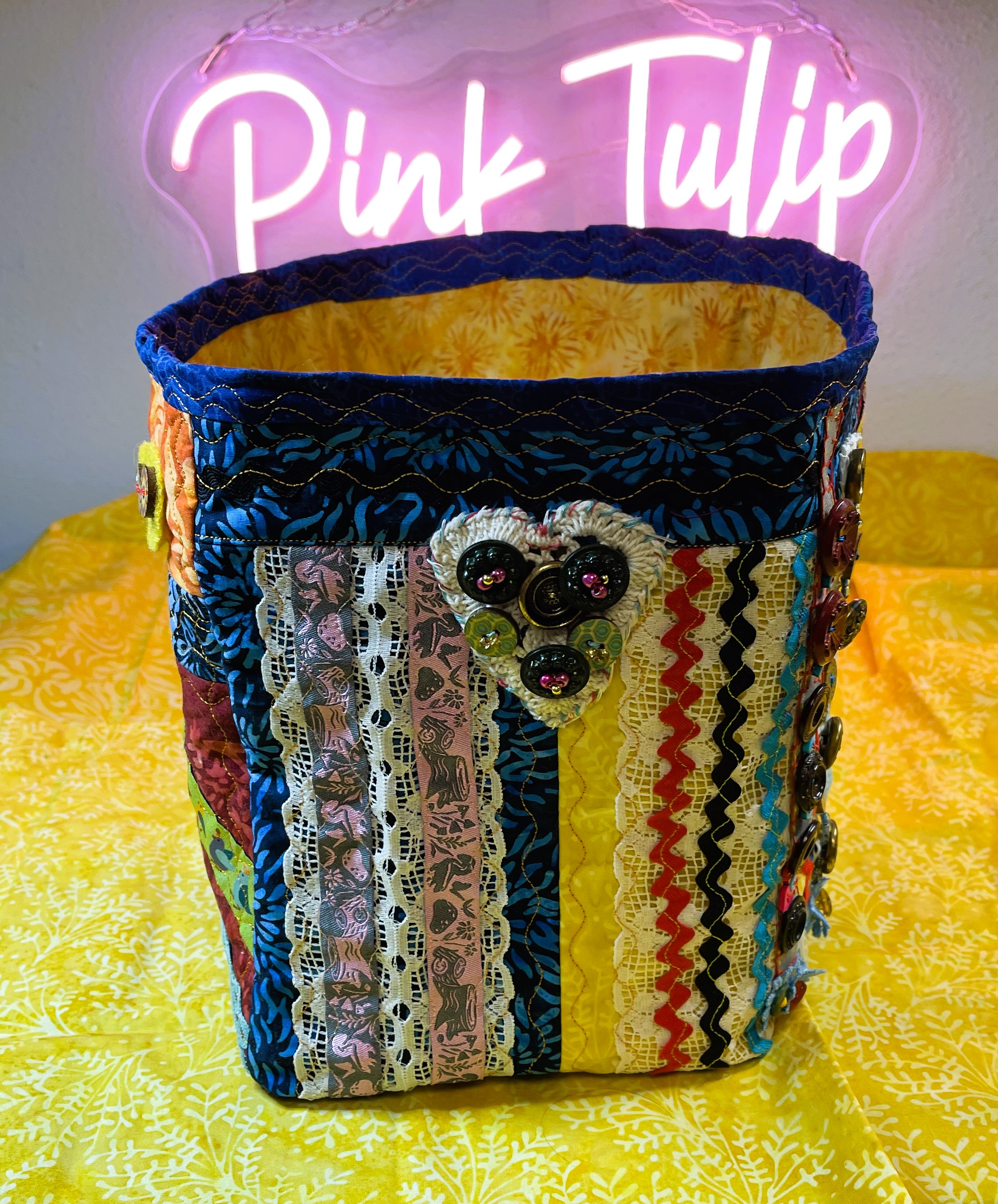
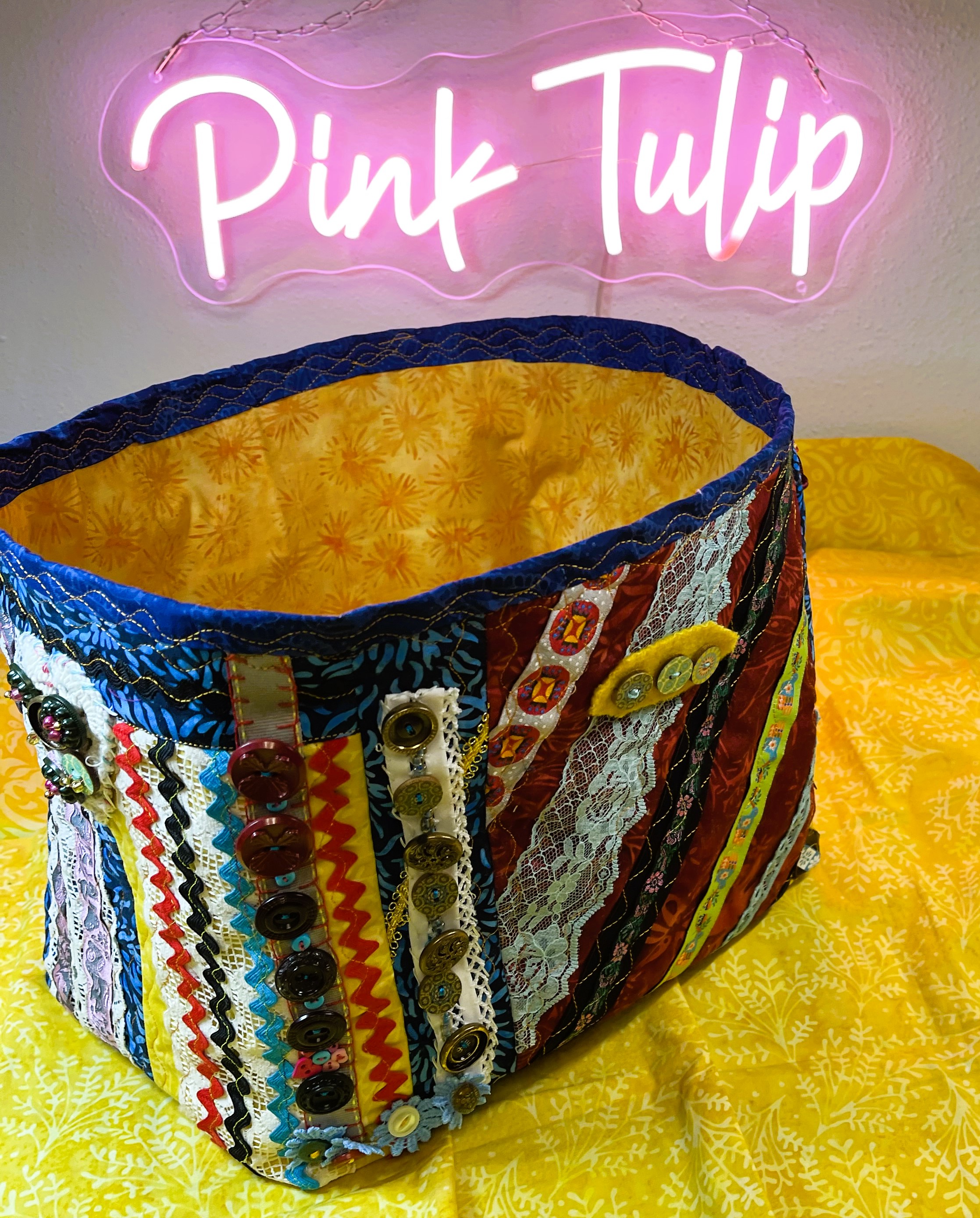
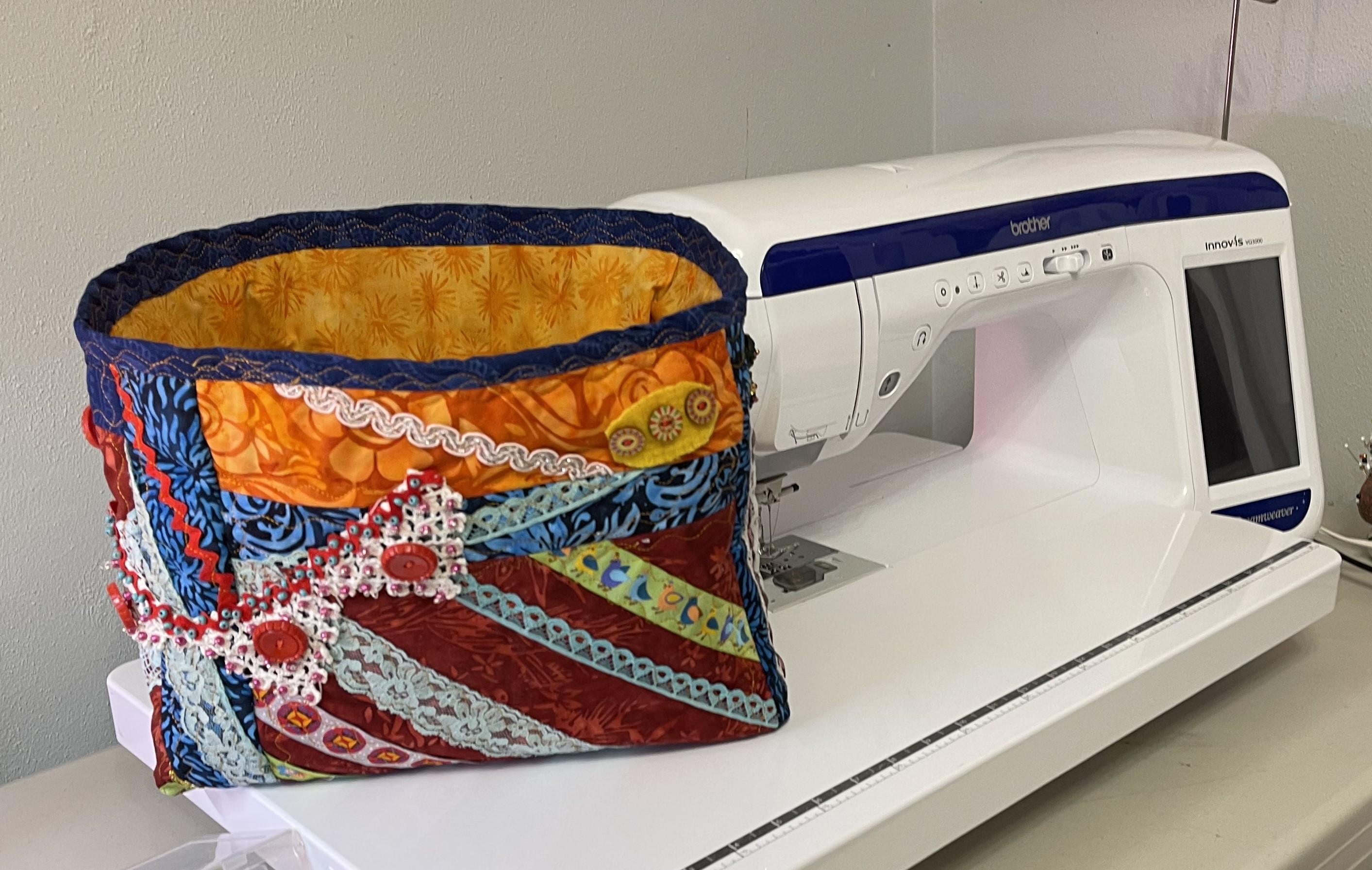
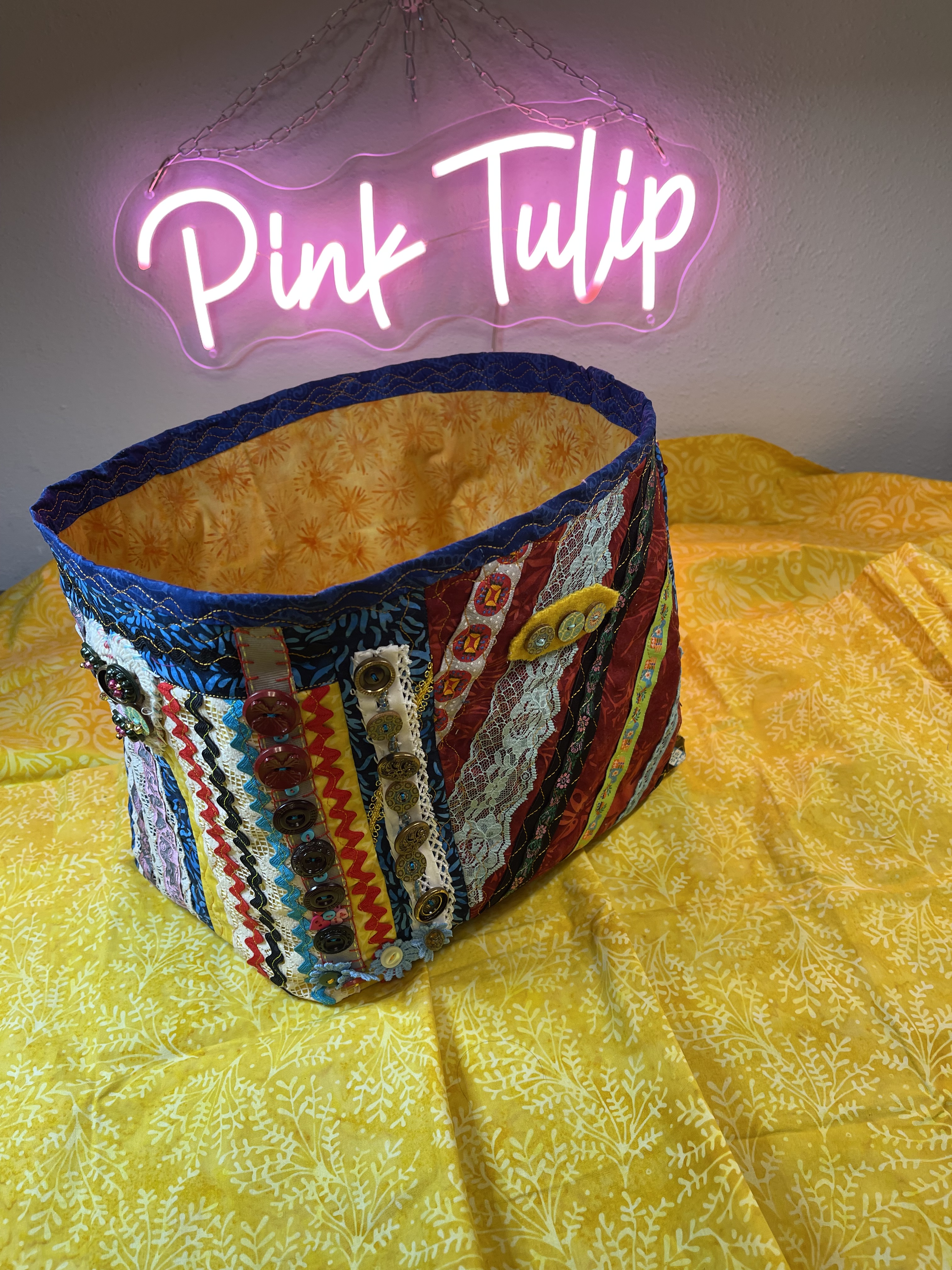
Of course, I cannot leave scraps behind, so I created a rectangle fabric box; embellishing with left over lace, trim and a few of the items I determined too delicate to use in a large quilt.
If you love Crazy Quilts, visit all the Island Batik Ambassador’s blogs (links below) to see all the fabulous creations this month!
Brenda Alburl- https://songbirddesigns.blog
Susan Deshensky- www.ladybluequilts.com/blog
Tina Dillard- https://quiltingaffection.blogspot.com/
Brittany Fisher- www.bobbinwithbrittany.com
Kimberly Flannagan- https://www.kimberlysquilts.com/blog
Preeti Harris- https://sewpreetiquilts.blogspot.com
Mania Hatziioannidi- www.maniaforquilts.com
Kim Jamieson-Hirst- https://www.chatterboxquilts.com/blog
Connie Kauffman- Kauffmandesigns.blogspot.com
Connie Kresin Campbell- https://conniekresin.com/
Emily Leachman- https://thedarlingdogwood.blogspot.com/
Denise Looney- https://quiltery.com
Leah Malasky- www.quilteddelights.com
Susan Michaels-https://dragonflyfiberart.blogspot.com/
Lisa Pickering- https://lisasquiltingpassion.blog/
Sarah Pitcher- www.pitchersboutique.com/blog-1
Gail Sheppard- https://quiltinggail.com/
Carol Stanek- stitchwithcolor.blogspot.com
Solomae Stoycoff- https://cuddlecatquiltworks.com
Jennifer Thomas- https://curlicuecreations.com
Suzy Webster- www.websterquilt.com


Leave a comment